Introduction
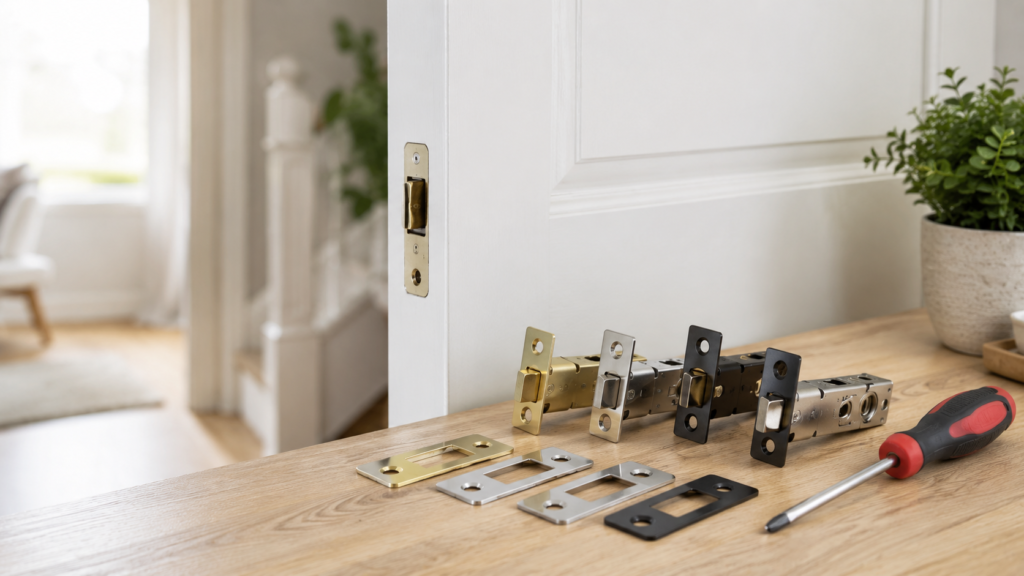
An adjustable door latch is one of those small hardware products that becomes very useful when a standard latch size is awkward, the existing handle position is not ideal, or you are trying to make a replacement fit older door prep without unnecessary extra work.
For many homeowners, the value of an adjustable latch is not that it is “better than every normal latch”. It is that it gives more fitting flexibility where a fixed latch can create hassle. That makes it especially relevant for retrofit work, minor alignment challenges and doors where you want a neater replacement without recutting more of the door edge than necessary.
This guide explains the best adjustable door latches in the UK, when one is worth buying, and how to choose the right type for your door and handle setup. Because many people buy an adjustable latch when the real issue is door alignment or strike plate position instead, this article includes a quick “do you actually need an adjustable latch?” section before the buying advice.
If the wider door issue is not yet diagnosed, Door Handles, Latches and Hardware Fixes (UK Guide) is the main hub for this cluster. And if the real problem is that the door already fails to catch or stay shut, How to Fix a Door That Won’t Stay Shut (Latch Alignment) should be read before you buy hardware.
Quick Recommendation
For most UK homeowners, the best adjustable door latch is a good-quality adjustable tubular latch that gives fitting flexibility without feeling flimsy, suits the existing handle setup, and matches the door’s usage level.
That is usually the best choice because it offers:
- more freedom when replacing older or awkward latch setups
- a better chance of avoiding unnecessary rework
- cleaner compatibility in retrofit situations
- a more practical route for minor fitting mismatches than forcing the wrong fixed latch size
- a strong monetisation fit because readers often want a specific hardware solution once they realise why their replacement latch is awkward
For most people, the key value is not “adjustable” as a gimmick. It is whether the latch solves a genuine fitting problem more easily than a fixed alternative.
Product Comparison Table
| Product Type | Best For | Main Strength | Main Weakness | Best Buy For |
|---|---|---|---|---|
| Standard Adjustable Tubular Latch | Most retrofit or replacement jobs | Best all-round flexibility | Not needed for every perfectly standard door | Most DIY replacements |
| Heavy-Duty Adjustable Latch | Frequently used doors | Better durability and stronger action | Costs more than lighter latch options | Busy household doors |
| Budget Adjustable Latch | Simple low-cost replacements | Cheap and accessible | Quality and feel vary more | Low-priority or temporary jobs |
| Smoother Action Adjustable Latch | Better feel in daily use | Cleaner operation and less rattly close | More expensive | Better-finish interior doors |
| Replacement-Focused Adjustable Latch Kit | Like-for-like repair convenience | Helpful for awkward older setups | Can include extras not everyone needs | Retrofit convenience jobs |
Best Options Explained
Standard Adjustable Tubular Latches
This is where most homeowners should start.
A good standard adjustable latch gives enough flexibility to cope with the common retrofit situations that make door-hardware jobs more frustrating than expected. It is especially useful when:
- the old latch size is awkward
- the handle position is not ideal for a standard fixed replacement
- you want to avoid extra recutting where possible
- the door is a normal internal household door
This is usually the best value category because it solves a real fitting problem without overcomplicating the decision.
Heavy-Duty Adjustable Latches
These are worth considering where the door is used frequently and the latch action needs to stay dependable under constant daily use. Hallway, kitchen and main circulation doors often justify a slightly stronger latch.
Budget Adjustable Latches
These can work on lower-priority doors, but quality varies more in this category. A cheap adjustable latch may fit the door and still feel rough, noisy or weak in use.
Smoother Action Adjustable Latches
Some buyers care not just about fit, but about how the handle and latch feel every day. In better-finish interiors, a smoother, cleaner-operating latch is often worth the extra money because it improves the door more generally rather than just making it functional again.
Replacement-Focused Adjustable Kits
These can be especially useful in older homes or retrofit work where you want maximum fitting convenience from one purchase, even if the door prep is less than ideal.
How to Choose the Right Option
Confirm that adjustability is actually useful for your job
This is the most important step.
An adjustable latch is valuable when:
- the current latch size is awkward to match exactly
- the spindle position needs flexibility
- you are doing replacement work in an older door
- you want to avoid extra cutting where possible
It is less important when:
- the existing fixed latch size is already standard and easy to replace
- the real fault is not the latch size at all
- the issue is strike alignment or door fit rather than the latch body
Match the latch to the door’s usage
A spare-room door and a heavily used household door are not the same job. Higher-use doors often justify better build quality.
Think about feel as well as fit
A latch affects how solid the handle feels and how neatly the door closes. This matters more than many people expect.
Do You Actually Need an Adjustable Latch?
Before buying, use this guide:
| Situation | Adjustable Latch More Useful? | Why |
|---|---|---|
| Old door with awkward replacement measurements | Yes | Fitting flexibility matters |
| Standard internal door with easy like-for-like size | Maybe not | Fixed latch may already be fine |
| Door will not stay shut because of strike alignment | Not first | Alignment comes before hardware buying |
| You want to avoid recutting old prep | Yes | Adjustable latch can simplify the job |
| You mainly want a better-feeling close on a busy door | Yes, if quality is good | Fit and daily feel both matter |
This is usually the easiest way to avoid buying an adjustable latch for the wrong reason.
Common Buying Mistakes
Buying adjustability when the real issue is alignment
If the strike plate or door position is wrong, adjustability in the latch body may not fix the real problem.
Choosing the cheapest adjustable latch without thinking about feel
A latch can technically fit and still feel poor in daily use.
Ignoring how often the door is used
A heavily used household door benefits from better latch quality.
Treating every replacement like a standard job
Retrofit work is often where adjustable latches are most genuinely useful.
Forgetting that the handle and latch work together
A new latch can improve feel, but a poor handle may still limit the result.
When You May Not Need This Product
You may not need an adjustable latch if:
- the existing fixed latch size is easy to replace directly
- the door issue is actually strike plate alignment
- the door has dropped or rubs the frame
- the handle is the real cause of the poor feel or operation
- you are trying to solve a closure issue rather than a latch fit issue
If the issue is closure and alignment, How to Fix a Door That Won’t Stay Shut (Latch Alignment) and How to Adjust a Strike Plate are more relevant. If the handle also needs attention, Best uPVC Door Handles (UK) may be the better product guide for external-door hardware, while the wider cluster hub remains Door Handles, Latches and Hardware Fixes (UK Guide).
Related Fix Guides
- Door Handles, Latches and Hardware Fixes (UK Guide)
- How to Fix a Door That Won’t Stay Shut (Latch Alignment)
- How to Adjust a Strike Plate
- How to Fix a Loose Door Handle (Latch Issues)
- Best uPVC Door Handles (UK)
- Best Euro Cylinder Locks (UK)