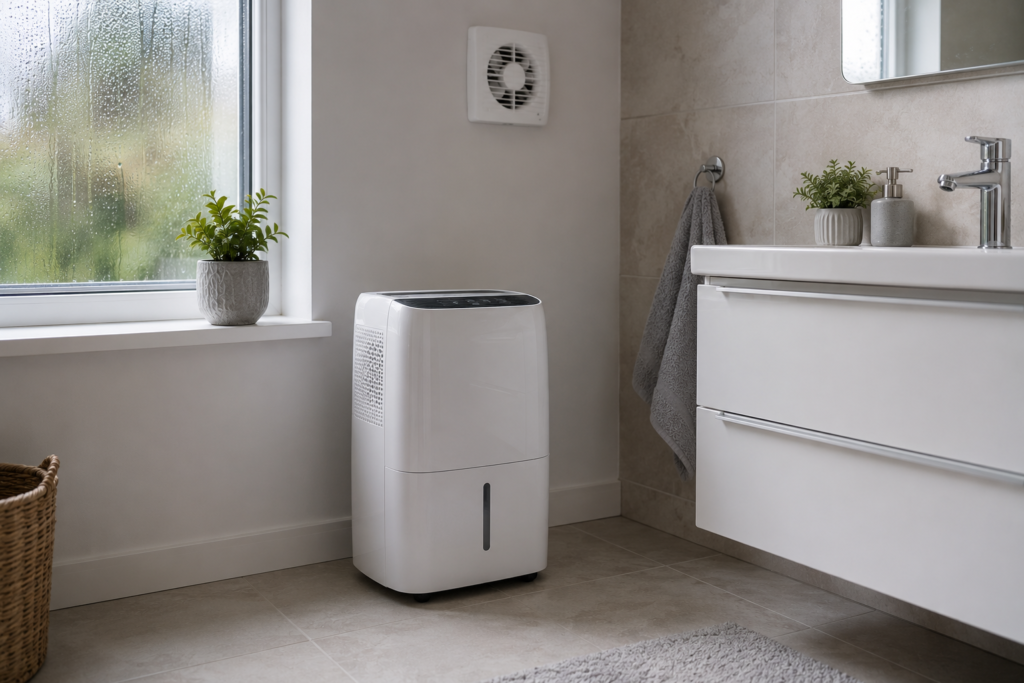
Introduction
If you are trying to deal with condensation, damp air, or recurring mould in a UK home, one of the most common questions is whether a dehumidifier or a ventilation fan is the better solution.
The honest answer is that they solve different versions of the same problem. A dehumidifier removes moisture that is already in the air. A ventilation fan helps push moist air out of the room before it spreads through the house. In some homes, one clearly makes more sense than the other. In others, they work best together.
That is why this is not really a “which product wins overall?” question. It is a “which one suits your actual moisture problem?” question. If you buy a dehumidifier when the real issue is a bathroom that never clears steam, you may spend more than necessary and still not fix the root cause. If you rely on a fan when the whole house stays humid in winter, you may still end up with wet windows and mouldy corners.
This guide explains the difference properly, compares when each option works best, and helps you decide whether you need a dehumidifier, a ventilation fan, or a combination of both. Because many buyers choose the wrong product by focusing on symptoms instead of the moisture source, this article includes a quick decision guide before the buying advice.
If you are still unsure whether the moisture problem is really condensation or something more localised, How to Tell If Mould Is Caused by Condensation or a Leak should be read first.
Quick Recommendation
For most UK homes, the better option depends on where the moisture starts.
- If the problem is steam and moisture being created in one room, especially a bathroom, a ventilation fan is usually the better first solution.
- If the problem is higher humidity across a room or the whole home, especially in bedrooms, rentals, or poorly ventilated winter conditions, a dehumidifier is often the better practical tool.
- If the home has ongoing bathroom moisture plus wider condensation elsewhere, both can be useful, but they solve different parts of the problem.
In simple terms:
- choose a ventilation fan to remove moisture at source
- choose a dehumidifier to reduce moisture already trapped indoors
That distinction is what makes the buying decision much easier.
Product Comparison Table
Affiliate disclosure: This post contains affiliate links. As an Amazon Associate I earn from qualifying purchases.
| Option | Best For | Main Strength | Main Weakness | Best Buy For | View on Amazon |
|---|---|---|---|---|---|
| Dehumidifier | Bedrooms, living spaces, wider home humidity | Removes moisture from indoor air directly | Does not replace poor extraction at the source | Whole-room or whole-house condensation issues | View on Amazon |
| Ventilation Fan | Bathrooms, shower rooms, wet rooms | Removes moist air before it spreads | Mainly solves room-specific moisture at source | Steam-heavy rooms and bathroom condensation | View on Amazon |
| Dehumidifier + Existing Ventilation | Homes with wider winter humidity | Better overall moisture reduction | More expensive than improving one weak point first | Persistent condensation beyond one wet room | View on Amazon |
| Upgraded Ventilation Fan Setup | Bathrooms with poor extraction | Stronger source control | Limited impact on wider house humidity if other causes remain | Bathroom-driven condensation and mould | View on Amazon |
| Both Used Properly | Homes with mixed moisture problems | Most complete control where both source and background humidity matter | Higher upfront cost and more setup thinking | Harder-to-control homes with repeat condensation and mould |
Best Options Explained
Dehumidifiers
A dehumidifier is usually the better choice when the home already has moisture lingering in the air and the problem is not limited to one burst of steam in one room.
It is especially useful when:
- windows are wet regularly
- bedroom walls or corners get mouldy
- the house feels damp or stale in winter
- drying clothes indoors increases moisture
- ventilation options are limited
- the issue affects several rooms, not just the bathroom
A dehumidifier helps by physically pulling moisture out of the air. That can make a significant difference in homes where humidity builds up faster than the house can lose it naturally.
This is why dehumidifiers are often the more useful option in bedrooms, box rooms, rentals, and older homes where condensation is not just a shower-room issue. If that sounds like your situation, Best Dehumidifier for Condensation in UK Homes is the most relevant companion product guide.
Ventilation Fans
A ventilation fan is usually the better choice when the moisture problem starts in one room and needs to be removed before it spreads.
This is most obvious in bathrooms, where:
- mirrors stay steamed up for ages
- walls stay wet after showers
- steam drifts into bedrooms or hallways
- mould forms near the ceiling or around windows
- there is no effective extraction
In those cases, a ventilation fan tackles the moisture at source. Instead of waiting for steam to cool, settle and spread, it removes humid air directly from the room.
That is why a fan is often the smarter first fix for bathroom-generated condensation and mould. If that is where your issue begins, How to Choose the Right Bathroom Ventilation Fan (UK Guide) is the key related guide.
When Both Make Sense
Some homes have two separate problems:
- poor source ventilation in wet rooms
- wider indoor humidity that stays high even after the steam event has ended
In that situation, a better bathroom fan plus a dehumidifier elsewhere can be the strongest combined approach. The fan stops some moisture entering the house in the first place. The dehumidifier helps remove the excess that still remains.
How to Choose the Right Option
Start by asking where the moisture is being created
This is the most important question in the whole article.
Ask yourself:
- Is the main issue after showers or bathing?
- Is the problem mostly in one bathroom?
- Are bedroom windows wet every morning?
- Does mould appear in corners away from bathrooms?
- Is the house humid generally, not just after one activity?
If the moisture starts mainly with one wet room, a fan often deserves priority. If the house holds moisture more widely, a dehumidifier often becomes more useful.
Think about whether you need source control or moisture reduction
This is the simplest way to compare the two:
- a fan = source control
- a dehumidifier = moisture reduction after the fact
One is not automatically “better” than the other. The better one is the one that matches the problem.
Consider your house layout and practical limits
Ventilation fans are more tied to room layout and installation. Dehumidifiers are more flexible because you can move them and use them where needed.
That means a dehumidifier may be the more practical option in:
- rented homes
- bedrooms
- rooms without fitted extraction
- homes where you need a flexible solution first
Quick Decision Guide
Before buying, use this guide:
| Your Main Problem | Better First Choice | Why |
|---|---|---|
| Bathroom stays steamy and wet after showers | Ventilation fan | Removes moisture at source |
| Bedroom windows and walls get condensation | Dehumidifier | Better for room humidity already trapped indoors |
| Mould appears across more than one room | Dehumidifier | Suggests wider humidity, not just one wet room |
| Bathroom mould forms because steam never clears | Ventilation fan | Better at preventing spread from the wet room |
| Home has both poor bathroom extraction and general winter dampness | Often both | One controls the source, the other lowers background humidity |
This is usually far more useful than asking which product sounds more powerful.
Common Buying Mistakes
Buying a dehumidifier to avoid fixing a bad bathroom extraction problem
A dehumidifier can help, but if steam is pouring out of the bathroom into the rest of the house after every shower, the source problem still matters.
Assuming a ventilation fan will solve whole-house humidity
It may help if the bathroom is the main source, but it will not usually solve broader winter condensation in bedrooms or living spaces on its own.
Treating both products as interchangeable
They are related, but they do different jobs. That is the whole reason people often buy the wrong one.
Ignoring the real moisture pattern in the home
A buyer focused only on “mould” can miss whether the cause is one wet room, trapped bedroom humidity, or a wider lifestyle moisture load.
Expecting either option to solve a leak-related problem
If dampness is coming from water ingress rather than humid air, neither is the true fix.
When You May Not Need This Product
You may not need either product as the first move if:
- the issue is actually a leak
- one localised patch is damp all the time
- mould is linked to failed sealant or plumbing
- the home mainly needs better daily habits rather than equipment first
- the issue is caused by indoor drying, no airflow, and very cold rooms that have not yet been addressed
If you are still deciding whether the moisture is from daily humidity or a direct water source, How to Tell If Mould Is Caused by Condensation or a Leak is more important than buying either product.
Related Fix Guides
- How to Stop Condensation on Windows
- How to Reduce Humidity in a House Naturally
- How to Stop Condensation on Bedroom Walls
- Do Dehumidifiers Really Stop Mould?
- Best Dehumidifier for Condensation in UK Homes
- How to Choose the Right Bathroom Ventilation Fan (UK Guide)
- How to Tell If Mould Is Caused by Condensation or a Leak