Introduction
Condensation on bedroom walls is one of the most frustrating moisture problems in a home because it often seems to appear even when the room feels clean, tidy and normal.
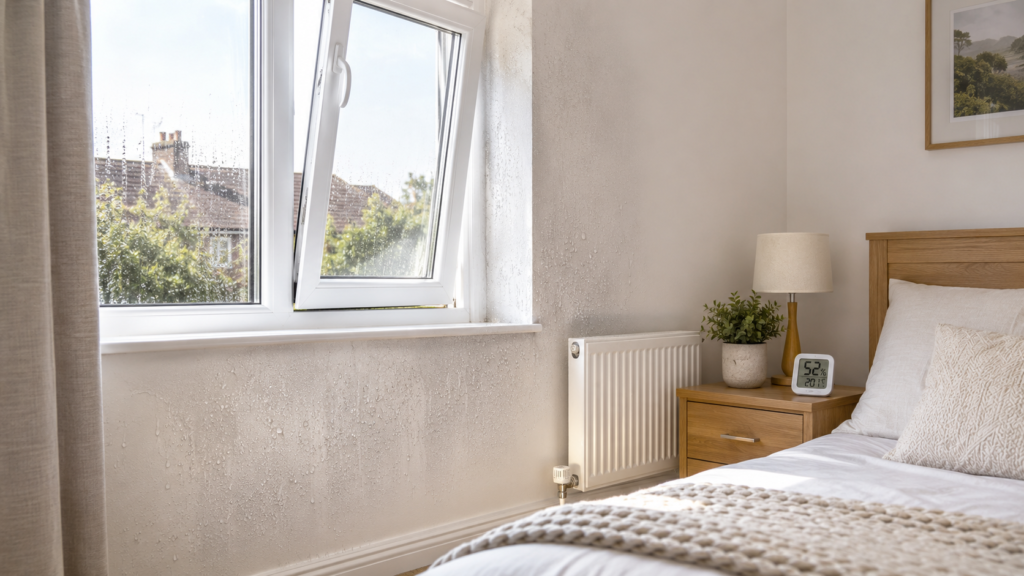
You may notice dampness in the top corners, cold patches behind furniture, mould on an outside-facing wall, or small droplets on painted surfaces near the window side of the room. In many cases, the cause is not a leak in the wall. It is the combination of overnight humidity, poor airflow and cold surfaces.
Bedrooms are especially prone because they are occupied for long periods with the doors and windows shut, moisture builds up from breathing, and temperatures often fall overnight. Once the air hits a cold wall surface, the moisture settles there. If it keeps happening, you end up with damp corners, black mould and paint that never seems fully dry.
This guide explains how to stop condensation on bedroom walls properly, not just how to wipe it away. It covers the main causes, the most effective practical fixes, and the bedroom habits that often make the problem worse. A quick bedroom-risk checklist is included because it helps identify whether the main issue is ventilation, room temperature, furniture placement or overall humidity.
If you are already getting heavy morning condensation on the glass as well as the walls, Why Do My Windows Get Condensation Every Morning? is the most relevant companion guide.
Why This Happens
Bedroom wall condensation happens when warm moist air in the room meets a surface that is cold enough to turn that moisture back into water.
Bedrooms create that situation very easily because:
- people breathe out moisture through the night
- doors and windows are often closed
- heating may be reduced overnight
- outside-facing walls get colder than the room air
- wardrobes, beds or storage can trap air against the wall
This is why the problem is often worst:
- in corners
- on external walls
- behind furniture
- near windows
- in colder bedrooms
If the issue is only one highly localised damp patch that stays wet all the time, then it may not be condensation. In that case, How to Tell If Mould Is Caused by Condensation or a Leak should be read first.
Tools or Materials You May Need
To reduce and monitor bedroom wall condensation, these are the most useful items:
- Hygrometer
- Dehumidifier
- Microfibre cloths
- Anti-mould cleaner if mould is already present
- Small gap spacers or furniture repositioning
- Window vacuum if windows are also streaming
- Consistent heating and ventilation routine
If humidity is clearly driving the problem, Best Dehumidifier for Condensation in UK Homes is the main product guide for this cluster.
Bedroom Condensation Risk Checklist
Use this quick check before deciding on the fix.
| Sign | What It Suggests |
|---|---|
| Mould is in upper corners or behind furniture on an outside wall | Strong condensation pattern |
| The room feels stuffy in the morning | Poor overnight ventilation |
| Windows are wet most mornings too | High overnight humidity |
| The wall is much colder than the rest of the room | Cold-surface condensation risk |
| Furniture is pressed tightly against the wall | Trapped damp air |
| The issue is worst in winter | Condensation is more likely than a leak |
If several of these apply, you are usually dealing with a bedroom humidity and cold-surface problem rather than a structural water ingress problem.
Step-by-Step Fix
Step 1: Wipe and dry the affected area
This is not the whole fix, but it matters.
If the wall is visibly damp or mouldy, dry it down where possible and remove ongoing surface moisture. That limits how long water sits on the paint or plaster and reduces the conditions mould needs.
If black mould is already present, clean it properly and monitor it. If the mould is mainly around the window edges and frame rather than on the broader wall area, How to Stop Black Mould Around Window Frames (UK Guide) may be the better targeted guide.
Step 2: Improve overnight ventilation
This is one of the biggest changes you can make.
Bedrooms trap moisture very easily because they are often sealed up for comfort at exactly the time when moisture is rising. You do not necessarily need the window wide open, but you do need some form of airflow.
Try:
- opening trickle vents if fitted
- leaving the door slightly open where practical
- airing the room in the morning
- allowing a brief period of ventilation before bed
If you are trying to balance warmth with ventilation, remember that a completely sealed bedroom often becomes more humid and therefore more likely to develop wall condensation.
Step 3: Reduce overnight humidity
Bedrooms generate moisture even without obvious wet activities.
To reduce the humidity load:
- do not dry clothes in the bedroom
- do not leave damp towels there
- improve extraction in nearby bathrooms so steam does not spread through the house
- reduce general indoor humidity if multiple rooms are affected
If this seems to be a whole-house issue rather than a bedroom-only one, How to Reduce Humidity in a House Naturally is the most useful next guide.
Step 4: Keep the room temperature steadier
Very cold bedrooms are much more likely to develop wall condensation.
You do not need to overheat the room, but if the wall becomes very cold overnight while humidity builds, condensation risk rises sharply. A more stable, moderate room temperature often helps more than letting the room get icy cold and then blasting heat into it later.
Step 5: Move furniture away from cold external walls
This is one of the most overlooked bedroom mould triggers.
Wardrobes, headboards, bedside units and storage placed tightly against an outside wall trap colder, stale air behind them. That creates an ideal spot for condensation and mould growth.
Even a small gap can help. If condensation is worst behind furniture, this is a major clue that airflow and cold-surface contact are driving the issue.
Step 6: Use a dehumidifier if the room stays humid
A dehumidifier can make a real difference in a condensation-prone bedroom, especially when:
- windows and walls are both affected
- ventilation options are limited
- the room is occupied heavily overnight
- mould has been a recurring winter problem
It is not a substitute for solving leaks, but it is often very effective against humidity-driven condensation. If you are unsure whether the machine would truly help or just mask the issue, Do Dehumidifiers Really Stop Mould? is the best next read.
Step 7: Check whether the issue is only the bedroom or part of a wider pattern
If the bedroom walls, windows and corners are all condensing, you likely have a room-specific humidity problem. If several rooms across the house show similar patterns, then the issue is broader and should be tackled at whole-house level.
In that case, How to Stop Condensation on Windows becomes more important because it ties the wider moisture pattern together.
When This Is Not a DIY Fix
You should investigate further if:
- the wall is wet in one localised patch all the time
- there is staining or bubbling paint in one section
- the plaster feels soft
- the problem does not improve at all with ventilation and humidity control
- the mould patch is linked to plumbing, a roofline or external defect
- you suspect a leak rather than a cold wall
If the dampness does not behave like normal cold-weather condensation, go back to How to Tell If Mould Is Caused by Condensation or a Leak before assuming the bedroom is just poorly ventilated.
How to Prevent the Problem
The best way to prevent condensation on bedroom walls is to reduce moisture while keeping surfaces warmer and air moving better.
That usually means:
- better overnight ventilation
- fewer moisture sources in the room
- keeping furniture off cold outside walls
- maintaining steadier room temperatures
- lowering overall household humidity
- wiping window condensation before it adds to the room moisture load
- using a dehumidifier in persistent cases
If you are mainly concerned about health or damage rather than the annoyance of dampness itself, Is Window Condensation Dangerous? is also worth reading because the same moisture pattern that affects the walls often affects indoor air quality and mould risk more generally.
Quick Checklist Summary
- Bedroom wall condensation is usually caused by moist air meeting a cold wall surface overnight
- It is most common on external walls, corners and behind furniture
- Bedrooms are high risk because breathing adds moisture while windows and doors stay shut
- Improve overnight ventilation rather than sealing the room completely
- Reduce moisture sources such as indoor drying and trapped bathroom steam
- Keep the room temperature more stable where possible
- Move furniture slightly away from cold walls
- Use a dehumidifier if humidity remains high and the problem keeps returning
Related Guides
- How to Stop Condensation on Windows
- Why Do My Windows Get Condensation Every Morning?
- How to Tell If Mould Is Caused by Condensation or a Leak
- How to Reduce Humidity in a House Naturally
- Do Dehumidifiers Really Stop Mould?
- Best Dehumidifier for Condensation in UK Homes
- Is Window Condensation Dangerous?