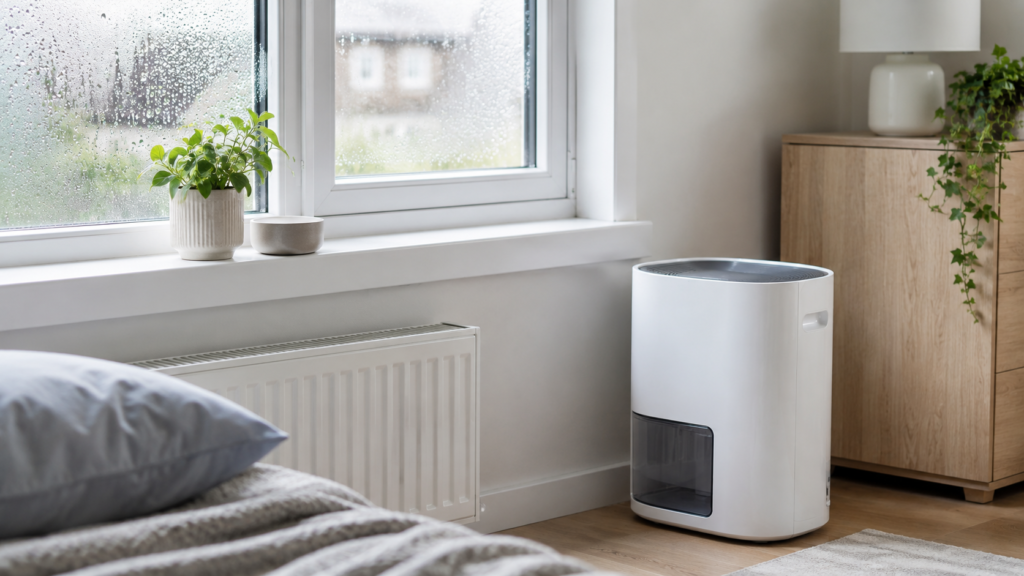
Condensation on windows is a common problem in UK homes, especially in colder months. It happens when warm, moist air hits a cold surface and turns into water droplets. A dehumidifier helps by removing moisture from the air, which reduces condensation and makes it harder for mould to grow.
Quick Comparison
Affiliate disclosure: This post contains affiliate links. As an Amazon Associate I earn from qualifying purchases.
| Product | View on Amazon | Best For | Key Feature | Good To Know |
|---|---|---|---|---|
| Compressor Dehumidifer | View on Amazon | Living rooms & whole homes | High moisture extraction | Works best in warmer indoor temperatures |
| Desiccant Dehumidifer | View on Amazon | Cold rooms & garages | Effective in low temperatures | Slightly higher electricity use |
| Compact Dehumidifer | View on Amazon | Bedrooms & small flats | Quiet & portable | Smaller water tank needs frequent emptying |
Best Overall – Compressor Dehumidifer
Compressor dehumidifiers are the best all-round choice for most UK homes. They’re good for bedrooms, living rooms, and anywhere condensation builds up regularly.
Pros
- Removes lots of moisture each day
- Usually more energy-efficient in normal indoor temperatures
Cons
- Can be a bit noisier than smaller models
- Less effective in very cold rooms
Best for Cold Rooms – Desiccant Dehumidifer
If the room is cold (garage, conservatory, spare room with little heating), a desiccant dehumidifier usually performs better than a compressor model.
Pros
- Works well in low temperatures
- Often lighter and easier to carry
Cons
- Often uses more electricity
- Sometimes costs more upfront
Best for Small Spaces – Compact Dehumidifer
For small flats, box rooms, or bedrooms, a compact unit can be enough, especially if you’re mainly dealing with mild condensation.
Pros
- Quiet and easy to move
- Takes up less space
Cons
- Smaller tank needs emptying more often
- Won’t handle heavy damp in large rooms
What to Look For When Buying a Dehumidifer
Extraction rate: how much water it can remove in a day
Tank size: bigger tanks need emptying less often
Noise level: important for bedrooms
Auto shut-off: stops when the tank is full
Room size guidance: match the unit to the room, not the whole house
Common Mistakes
Buying a unit that’s too small for the room
Putting it right against a wall (needs airflow)
Expecting it to fix poor ventilation on its own
FAQ
Do dehumidifiers stop mould?
They help by reducing moisture, which mould needs to grow. You’ll still want to clean existing mould and improve ventilation.
Should I run it all day?
You can, but many people run it for a few hours a day or use a humidity target mode if the unit has one.
Do I need one upstairs and downstairs?
If the problem is only in one area (e.g. a bedroom), start with one unit and move it as needed.