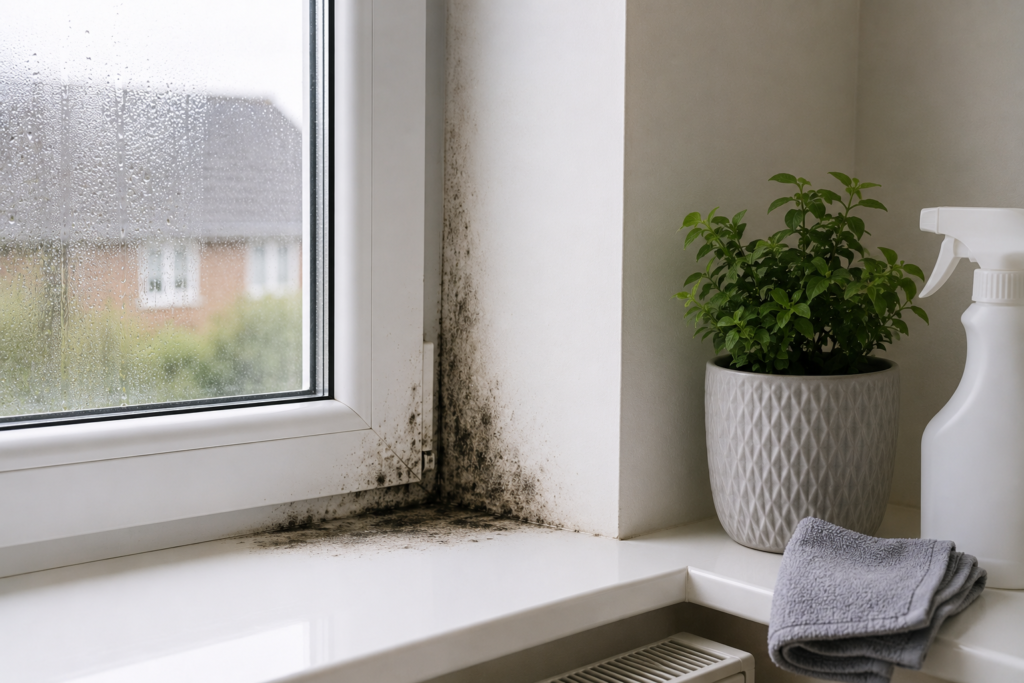
Black mould around window frames is very common in UK homes, particularly during colder months. It can look alarming, but in most cases it’s caused by everyday condensation and poor airflow rather than a serious structural fault.
The key is tackling it in two parts:
- Remove what’s already there
- Reduce the moisture that’s feeding it
If you regularly see condensation on the glass in the mornings, this is usually part of a wider humidity issue. For a full breakdown of why this happens and how to control it across your home, see our guide on How to Stop Condensation on Windows.
Why Black Mould Forms Around Window Frames
Warm indoor air always contains some moisture — even if the room doesn’t feel damp. When that warm air meets a cold surface like window glass, frame edges, or rubber seals, it cools and releases water as condensation.
Window frames are especially vulnerable because:
- Condensation collects in corners and along seals
- Curtains and blinds restrict airflow around the frame
- Trickle vents are often closed or blocked
- Bedrooms are kept cooler overnight
- Water sits unnoticed on the frame lip for hours
Mould spores are always present in the air. They only grow when moisture sits long enough.
That’s why cleaning alone rarely fixes the problem. If airflow and humidity aren’t addressed, it usually comes back.
Is Black Mould Around Windows a Serious Problem?
Often, it’s a surface issue rather than a structural one — particularly if:
- It wipes away from uPVC and rubber seals
- The surrounding wall feels dry
- It appears in winter and improves in spring
However, you should investigate further if:
- It returns very quickly after cleaning
- It spreads onto plaster, paint or wallpaper
- The wall around the window feels cold and damp
- You notice tide marks or bubbling paint
A small patch confined to the frame is usually manageable. Widespread damp beyond the window edge may indicate a separate issue.
What to Check Before Fixing Anything
Before cleaning, spend a couple of minutes identifying what’s causing the moisture:
- Do you get condensation on the glass most mornings?
- Are trickle vents open and clear of dust or paint?
- Are curtains pressed tightly against the frame overnight?
- Is the room aired regularly, even briefly?
- Is large furniture pushed against an outside wall near the window?
If the room is often closed up and cool, mould is much more likely.
Also check for small gaps around older frames. Cold air leaking in can chill the frame surface, increasing condensation. Proper sealing (see our guide on Best Window Draught Seal Strips (UK) can help stabilise surface temperature.
How to Stop Black Mould Around Window Frames
Step 1: Improve Ventilation
You don’t need windows open all day. Even 5–10 minutes of fresh air in the morning can significantly reduce moisture buildup — especially in bedrooms.
If your windows have trickle vents, keep them open.
In bathrooms and kitchens, proper extraction is critical. If steam lingers long after showers, upgrading or correctly using an extractor fan can make a major difference (see How to Choose the Right Bathroom Ventilation Fan (UK Guide)).
Small improvements in airflow often have a large impact over time.
Step 2: Reduce Overnight Moisture
Common sources of excess moisture include:
- Drying clothes indoors
- Cooking without lids
- Long hot showers
- Closing internal doors immediately after bathing
In bedrooms, leaving the door slightly ajar overnight can improve air movement (if appropriate for your home).
If condensation is heavy throughout the house, a dehumidifier can help reduce overall moisture levels while you address ventilation habits (see Best Dehumidifier for Condensation in UK Homes).
Step 3: Clean the Mould Properly (Without Damaging Seals)
Use a mould remover suitable for uPVC and rubber seals. Avoid aggressive scrubbing — this roughens the surface and can make mould more likely to return.
Apply, leave for the recommended time, then wipe gently. Repeat if needed rather than scrubbing hard.
For suitable products, see:
Best Mould Remover Spray for Window Frames (UK)
Step 4: Dry the Frame and Seals Fully
This step is often overlooked.
After cleaning, dry the frame and rubber seal line thoroughly with kitchen roll or a clean cloth. Mould thrives in lingering moisture.
Breaking the “constant damp” cycle is key.
Step 5: Stop Condensation Sitting There Again
If you regularly get condensation, wipe the window in the morning for a couple of weeks while improving ventilation.
This simple habit can interrupt the moisture cycle and prevent spores from re-establishing.
Long term, consistent airflow and humidity control are far more effective than repeated chemical cleaning.
What to Do If Mould Keeps Coming Back
If mould keeps returning after cleaning, it usually means the underlying moisture issue has not been resolved. Improving ventilation, reducing indoor humidity, and ensuring window seals are intact are key steps to preventing repeat growth.
When Mould Is More Than Condensation
Persistent mould may indicate a deeper damp problem such as leaks, insulation gaps, or structural moisture. If mould appears even in well-ventilated areas, it may be worth investigating further or seeking professional advice.
How to Stop Mould Returning in Winter
During colder months, condensation levels rise due to temperature differences between indoor air and cold surfaces. Keeping rooms heated consistently, ventilating regularly, and managing humidity can significantly reduce winter mould risk.
Common Mistakes to Avoid
- Cleaning without changing airflow
- Repeatedly using harsh bleach on rubber seals
- Scrubbing seals aggressively
- Sealing the room tightly to “keep heat in”
- Assuming mould automatically means a window leak
In UK homes, condensation is far more common than structural failure.
When to Stop DIY and Get Advice
Seek further investigation if:
- The surrounding plaster is soft, bubbling or crumbling
- Damp patches extend below the window
- The mould spreads despite improved ventilation
- You suspect the window frame or seal has failed
Those signs may point beyond simple condensation control.
Final Reassurance
Black mould around window frames is one of the most common winter issues in UK homes. In most cases, it’s not a defect — it’s a moisture management issue.
The long-term solution is simple but consistent:
- Remove what’s there properly
- Dry surfaces thoroughly
- Improve airflow
- Reduce overnight moisture
When cleaning is combined with better ventilation and humidity control, the problem usually becomes manageable — and often disappears entirely.