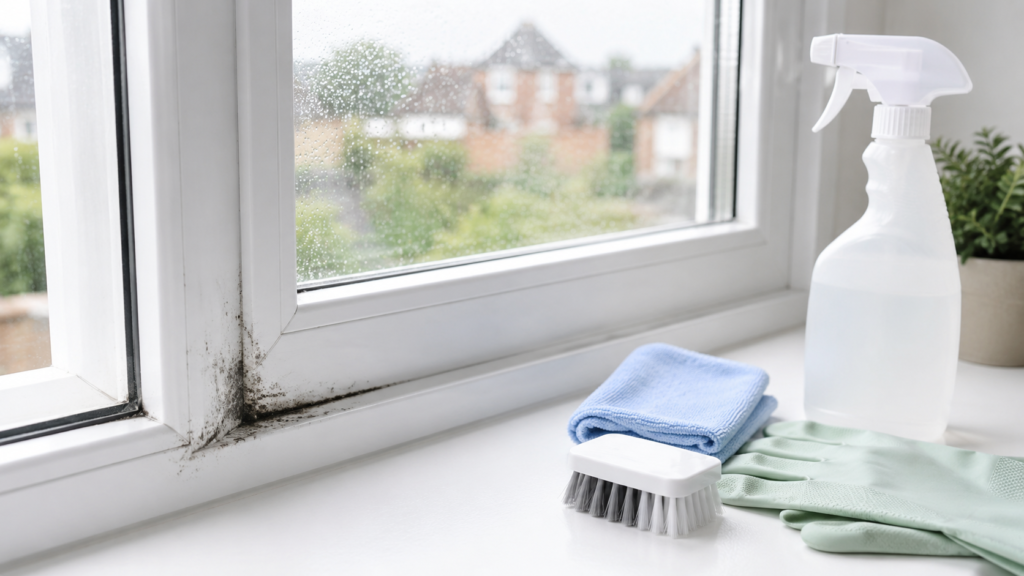
A mould remover spray can quickly deal with visible black mould on window frames — but choosing the right type matters.
Window frames and seals are usually uPVC and rubber. Overly harsh cleaners or repeated aggressive scrubbing can discolour surfaces and degrade seals over time.
Before reaching for chemicals, it’s important to understand why mould forms in the first place. In most UK homes, it’s linked to condensation and airflow rather than a leak. If you haven’t already, read our guide on How to Stop Black Mould Around Window Frames (UK Guide) to address the root cause.
This guide focuses on choosing a spray that removes mould effectively without causing unnecessary damage.
Why the Right Spray Matters
Black mould around window frames is usually surface growth caused by moisture sitting along seal lines and frame edges.
Cleaning works — but if:
- The product is too harsh
- The contact time is unclear
- You rely on scrubbing instead of chemistry
- Moisture isn’t controlled afterwards
…it often comes back.
Long-term success comes from combining proper cleaning with improved ventilation and humidity control (see How to Stop Condensation on Windows for the full picture).
Types of Mould Remover Sprays
Bleach-Based Sprays
These typically kill mould quickly and visibly lighten staining.
Pros
- Fast acting
- Strong visual improvement
Cons
- Fumes can be unpleasant
- Repeated use may affect rubber seals
- Not ideal for frequent maintenance
Best used occasionally for heavier staining rather than routine cleaning.
Non-Bleach Mould Removers
Designed to kill spores without strong chlorine content.
Pros
- Often gentler on seals
- Suitable for more regular use
- Lower odour options available
Cons
- May require slightly longer contact time
- Sometimes need a second application
Often a better choice for seasonal condensation-related mould.
Low-Odour / Family-Friendly Options
Useful for bedrooms and regularly occupied spaces.
Pros
- More comfortable for indoor use
- Reduced harsh fumes
Cons
- May not remove heavy staining in one go
Suitable for light surface mould and routine maintenance.
Comparison Table
Affiliate disclosure: This post contains affiliate links. As an Amazon Associate I earn from qualifying purchases.
| Type | Best For | Strength | Impact on Seals | Typical Use | View on Amazon |
|---|---|---|---|---|---|
| Bleach-based spray | Heavy visible staining | Strong | Can affect rubber over time | Occasional deep clean | View on Amazon |
| Non-bleach spray | Seasonal condensation mould | Moderate | Generally seal-safe | Winter maintenance | View on Amazon |
| Low odour spray | Bedrooms / light mould | Mid-moderate | Usually safe | Light surface control | View on Amazon |
This isn’t about “strongest is best.” It’s about appropriate use.
What to Look For (Practical Checklist)
- States it’s suitable for uPVC, rubber seals or indoor use
- Clear contact time instructions (so you don’t scrub unnecessarily)
- A nozzle that targets corners and seal lines
- Basic ventilation and glove guidance
Products that rely on heavy scrubbing as the main method are rarely ideal for window seals.
What to Avoid
- Industrial masonry cleaners
- Products with unclear safety instructions
- Repeated soaking of rubber seals
- Using bleach weekly as a “preventative”
If mould returns within days despite proper cleaning, the issue is unlikely to be the spray — it’s probably ongoing condensation.
Who This Is Suitable For
- Surface mould on uPVC window frames
- Black mould along rubber seal lines
- Condensation-related mould that returns seasonally
- Targeted cleaning in corners and frame edges
This is a surface solution — not a structural repair.
Who May Need a Different Approach
- Persistent damp patches around windows
- Mould spreading onto plaster or wallpaper
- Rapid regrowth despite good airflow
- Suspected water ingress or failed window seals
If that’s the case, cleaning alone won’t solve it.
How to Use Mould Spray Properly
- Ventilate the room first
- Apply the spray to affected areas
- Leave for the recommended contact time
- Wipe gently — avoid aggressive scrubbing
- Dry the area thoroughly afterwards
Drying matters. Lingering moisture can restart the growth cycle.
For a full step-by-step breakdown of reducing recurrence, see How to Stop Black Mould Around Window Frames (UK Guide).
Frequently Asked Questions
What removes black mould from window frames?
Black mould on window frames can usually be removed using a dedicated mould remover spray, diluted white vinegar, or a mild bleach solution. For uPVC frames, specialist mould sprays are often safer than bleach as they are less likely to cause staining or long-term surface damage.
Is bleach or mould spray better for uPVC windows?
Mould sprays designed for indoor use are generally better than bleach for uPVC windows. Bleach can remove surface mould but does not always kill spores fully and may damage seals or discolour plastic over time. A proper mould treatment product is usually more effective long term.
How do you stop mould coming back around window frames?
To stop mould returning, reduce condensation levels by improving ventilation, wiping down moisture regularly, and using a dehumidifier if needed. Sealing draughts and maintaining consistent indoor temperatures can also help prevent mould growth.
Final Thoughts
A good mould remover spray can solve the visible problem quickly — but it’s only part of the solution.
Long-term success comes from:
- Cleaning properly once
- Drying thoroughly
- Improving airflow
- Reducing overnight moisture
When combined with better ventilation and humidity control, window-frame mould usually becomes a manageable seasonal issue rather than a constant battle.
If condensation is widespread across your home, you may also benefit from improving extraction (see How to Choose the Right Bathroom Ventilation Fan (UK Guide) or reducing overall humidity levels (see Best Dehumidifier for Condensation in UK Homes).