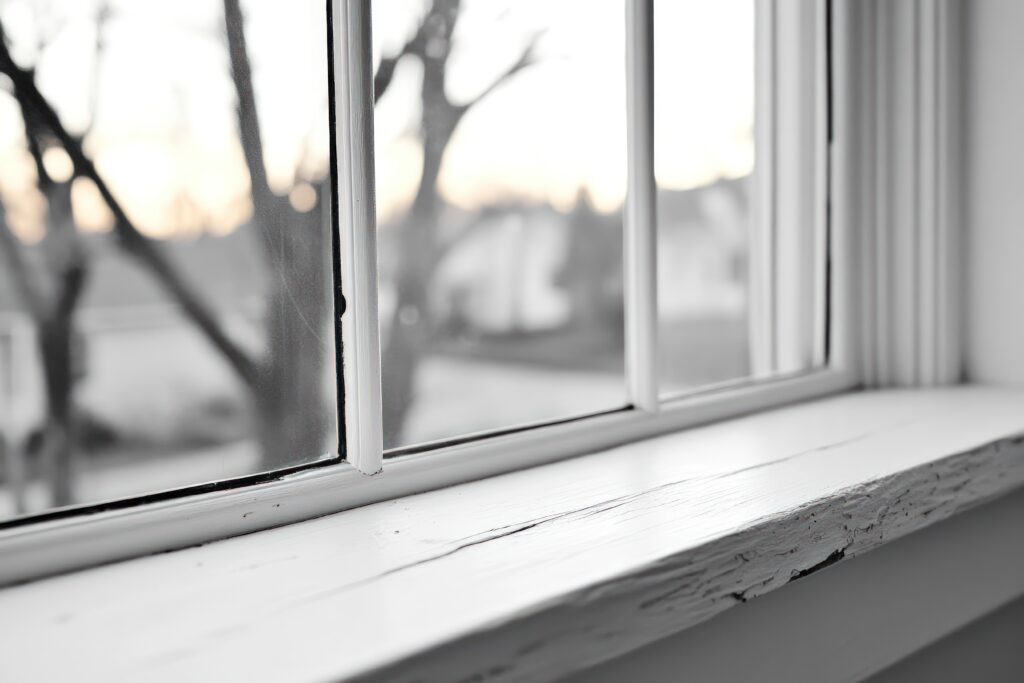
Cold air coming through window gaps is common in UK homes, especially in older properties or during windy weather. Even small gaps can make a room feel noticeably colder and push up heating costs.
But draughts aren’t just a comfort issue — they can also contribute to condensation and mould by creating cold surfaces where moisture settles.
If you’re also seeing window condensation in winter, it’s worth understanding the wider moisture picture in our guide on How to Stop Condensation on Windows.
This guide focuses on identifying the exact source of the draught and sealing it properly — without accidentally blocking ventilation or causing other issues.
Why Cold Air Comes Through Window Gaps
Over time, window seals compress, shrink or peel away. Frames can shift slightly with age and temperature changes.
Common causes include:
- Worn or flattened rubber seals
- Gaps where foam or brush seals have degraded
- Misaligned closing mechanisms
- Warped timber frames (older windows)
- Poorly fitted secondary glazing
In many cases, the window itself is sound — it’s the seal around it that’s failing.
Is This a Serious Issue?
Usually not structurally serious — but it can:
- Make rooms uncomfortable
- Increase heating costs
- Create cold spots that encourage condensation
- Lead to rattling in windy conditions
If you’re getting visible rainwater inside, that’s more urgent than a simple air draught.
It’s also important not to confuse “cold glass” with a draught. Glass will naturally feel cold in winter — that doesn’t automatically mean there’s a gap.
What to Check Before Fixing Anything
Before applying any seal, identify exactly where air is entering:
- Feel around the frame on a windy day
- Use a tissue to spot airflow movement
- Check whether the window closes firmly all the way around
- Look for cracked, flattened or missing seals
- Identify whether the gap is at the opening edge or between frame and wall
Also check you’re not sealing drainage (weep) holes on uPVC frames — these are designed to let water escape.
Accurate diagnosis prevents wasted effort.
How to Stop Cold Air Coming Through Window Gaps
Step 1: Identify the Exact Gap
Work slowly around the frame. Note where you feel airflow — hinge side, closing side, bottom edge or corners.
The solution depends on the type and size of gap.
Step 2: Choose the Right Type of Seal
Different gaps require different sealing materials. Too thin does nothing. Too thick prevents proper closure.
For a breakdown of options, see:
Best Window Draught Seal Strips (UK)
Choosing the correct thickness is more important than choosing the strongest adhesive.
Step 3: Clean the Surface Properly
Wipe down the frame so adhesive seals bond correctly. Dust and damp reduce adhesion and cause premature peeling.
Allow the surface to dry fully before applying any seal.
Step 4: Apply the Seal Neatly
Apply in a continuous line where possible. Avoid stretching foam seals tightly — they can shrink back later.
Press firmly but evenly.
Take your time. A neat fit improves durability.
Step 5: Test Closure and Adjust
Close the window gently.
It should shut firmly without force. If you have to push hard, the seal may be too thick.
The window should lock securely and sit evenly in the frame.
How Draughts Connect to Condensation
Cold air entering through gaps lowers the temperature of the window frame and surrounding surfaces.
Colder surfaces increase the likelihood of condensation forming — particularly in bedrooms and living rooms overnight.
Sealing draughts properly can:
- Improve comfort
- Stabilise surface temperature
- Reduce condensation risk
However, sealing alone won’t fix heavy condensation. If moisture levels are high throughout the home, ventilation and humidity control need addressing (see How to Stop Condensation on Windows for the full guide).
Common Mistakes to Avoid
- Using a seal that’s too thick
- Sealing over drainage/weep holes
- Applying seals to damp or dusty frames
- Trying to fix a misaligned window with seals alone
- Blocking intentional ventilation points
Sealing everything tightly without airflow planning can worsen condensation problems.
When to Stop DIY and Seek Help
Stop and investigate further if:
- The window won’t close or lock properly
- The frame is cracked or badly warped
- You’re getting water ingress rather than just air movement
- The surrounding plaster shows signs of damp
Those issues may require adjustment, repair or professional assessment.
Final Reassurance
Draught sealing is one of the most effective “small jobs” you can do to improve comfort in a UK home.
You don’t need to replace your windows to feel a difference.
When you:
- Identify the gap correctly
- Choose the right seal thickness
- Apply it neatly
- Maintain sensible ventilation
…most people notice a room feels calmer — less cold air movement, fewer rattles, and often less condensation too.