Introduction
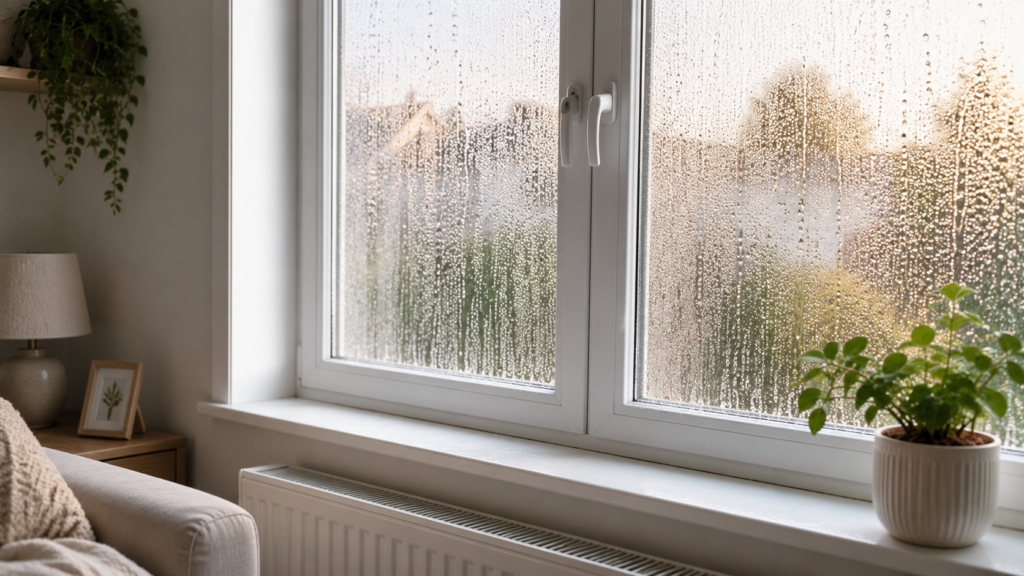
If your windows are covered in water droplets every morning, you are not alone. This is one of the most common cold-weather problems in UK homes, especially in bedrooms, bathrooms and older houses with limited ventilation.
The good news is that morning window condensation does not usually mean your windows are broken. In most cases, it happens because warm moist indoor air meets a cold glass surface overnight. Once that air cools down enough, the moisture turns back into water and settles on the window.
What matters is not just wiping it away, but understanding why it is happening in your home. If you leave the cause unaddressed, daily condensation can lead to mould growth, damp window frames, damaged sealant and a generally colder-feeling room.
This guide explains why it happens, how to reduce it properly, and how to tell whether it is a normal condensation problem or something that needs closer attention. A quick overnight-check section is included here because it helps most homeowners work out whether the issue is mainly heating, ventilation, humidity or window temperature.
Why This Happens
Window condensation forms when three things come together:
- warm indoor air
- excess moisture in that air
- a cold glass surface
At night, bedrooms often become the perfect environment for this. People breathe out moisture while sleeping, doors and windows stay shut for hours, temperatures fall, and the glass becomes one of the coldest surfaces in the room. By morning, the air beside the glass has cooled enough for the moisture to condense into visible droplets.
The most common causes are:
High indoor humidity overnight
Even a fairly normal bedroom can build up moisture during the night. Two adults sleeping in one room with the door and window shut can create far more moisture than many people realise.
Poor ventilation
If damp air cannot escape, it stays trapped in the room and eventually finds the coldest surface available. That surface is often the window.
Cold glass
Single glazing, older double glazing, north-facing rooms and poorly heated spaces all make window surfaces colder, which increases condensation risk.
Wider household moisture problems
Drying clothes indoors, poor bathroom extraction and general humidity across the house can all contribute. If the issue is happening in several rooms rather than one bedroom, How to Stop Condensation on Windows is the main hub guide for solving the problem across the whole house rather than treating one symptom at a time.
Tools or Materials You May Need
You do not usually need many tools to start reducing window condensation, but these can help:
- Microfibre cloth or absorbent cloth
- Window vacuum if condensation is heavy
- Hygrometer to track humidity
- Dehumidifier if moisture levels are consistently high
- Improved trickle vent or ventilation habits
- Anti-mould cleaner if early frame mould has already appeared
If moisture remains high even after you improve habits and ventilation, Best Dehumidifier for Condensation in UK Homes is the most relevant product guide for choosing a unit that actually suits this problem.
Quick Overnight Check
Before changing too much, do this simple check for two or three mornings in a row:
1. Check which windows are affected
Is it only bedroom windows, or multiple rooms?
2. Check whether the room feels stuffy in the morning
A stale, humid room usually points to poor ventilation overnight.
3. Check where the water is forming
Moisture around the whole pane usually points to general condensation. Heavier pooling at the bottom edge can mean it is being left too long each day.
4. Check humidity if possible
If indoor humidity is consistently high, you are dealing with more than just cold glass.
5. Check whether mould is starting
If black mould is appearing on seals or frames, the issue is no longer just cosmetic.
This quick check helps you work out whether the fix should focus mainly on airflow, moisture reduction, heating consistency or a combination of all three.
Step-by-Step Fix
Step 1: Wipe the condensation away each morning
This is not the full solution, but it is still important.
If you leave water sitting on the glass, frame or sealant every day, you increase the risk of:
- mould on the seals
- staining on sills
- deterioration of paint or timber
- black marks on uPVC corners
Use a cloth or window vacuum and remove the moisture properly rather than just smearing it around.
If mould is already beginning to appear on the frame, How to Stop Black Mould Around Window Frames (UK Guide) is the best next guide because that issue often starts with repeated morning condensation.
Step 2: Improve bedroom ventilation overnight
This is often the biggest change.
You do not necessarily need to sleep with the window wide open. But you do need some moisture to escape if the room is regularly condensing every morning.
Try:
- opening trickle vents if your windows have them
- leaving the bedroom door slightly open if appropriate
- opening the window briefly in the morning and sometimes before bed
- avoiding shutting the room up completely every night
If the room becomes cold very quickly and you are trying to balance comfort with airflow, Why Sealing Draughts Can Reduce Condensation is a useful related read because cold draughts and condensation control need to be balanced properly rather than treated as opposites.
Step 3: Reduce overnight moisture sources
Bedrooms often feel dry compared with bathrooms, but they still collect moisture easily.
Reduce avoidable sources such as:
- drying clothes in the room
- damp laundry baskets
- wet towels left indoors
- poor extraction from nearby bathrooms feeding moisture into the house
If general indoor moisture is staying high all day rather than just overnight, How to Reduce Humidity in a House Naturally is the most useful next article for tackling the bigger cause instead of only managing the window symptom.
Step 4: Keep the room temperature steadier
A room that becomes very cold overnight is more likely to produce condensation.
You do not need to overheat the room, but a very sharp drop in room temperature can make the glass much colder and push moisture out of the air faster. Consistent, moderate heating usually works better than allowing the room to become icy cold and then blasting it later.
Step 5: Check whether the issue is one room or the whole house
If only one room gets condensation, that often points to room-specific habits, airflow or temperature. If many windows across the house are wet each morning, you may have a broader humidity issue.
In that case, the wider plan in How to Stop Condensation on Windows matters more than any one-room tweak.
Step 6: Use a dehumidifier if needed
A dehumidifier is often useful when:
- ventilation options are limited
- the room is regularly occupied overnight
- you are in a rental or older property with recurring condensation
- the problem remains despite sensible changes
A dehumidifier is not always the first fix, but it can be one of the most effective practical ones in the right home.
When This Is Not a DIY Fix
Morning window condensation is usually manageable as a home moisture problem, but you should look more closely if:
- moisture is forming between panes of double glazing
- only one failed unit is heavily affected compared with others
- window seals appear damaged
- surrounding walls or plaster are also becoming damp
- mould is spreading despite regular cleaning and ventilation
- you suspect a leak rather than simple condensation
If you are unsure whether the moisture is really condensation or something else, How to Tell If Mould Is Caused by Condensation or a Leak helps separate a ventilation problem from a more serious defect.
You should also be more cautious if the room has persistent mould, worsening damp patches or signs that the issue is affecting more than just the window surface.
How to Prevent the Problem
The best prevention is a combination of lower indoor humidity and better overnight airflow.
Good habits include:
- wiping windows daily during colder months
- opening windows briefly in the morning
- using trickle vents where available
- avoiding indoor clothes drying in bedrooms
- keeping bathroom moisture from spreading through the house
- maintaining more stable room temperatures
- using a dehumidifier where needed
If the concern is not just the nuisance of wet glass but whether it is becoming a health or damage issue, Is Window Condensation Dangerous? explains when routine condensation becomes something more important to address.
Quick Checklist Summary
- Morning window condensation usually happens when warm moist indoor air hits cold glass overnight
- Bedrooms are especially prone because breathing, closed doors and lower night-time temperatures all increase the risk
- Wipe the moisture away every morning to reduce mould and frame damage
- Improve ventilation overnight rather than sealing the room completely
- Reduce moisture sources such as indoor drying and trapped bathroom humidity
- Keep room temperatures steadier where possible
- Consider a dehumidifier if the issue keeps returning
- Investigate further if moisture is between panes, mould spreads, or you suspect a leak