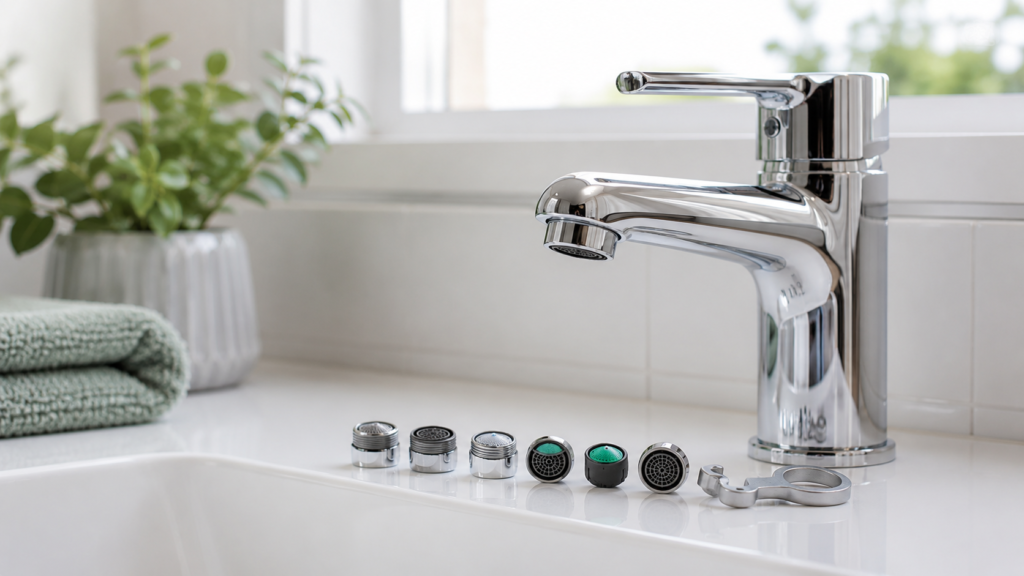
Introduction
A tap aerator or flow regulator is a small part, but it can make a noticeable difference to how a bathroom tap performs.
The right one can improve splash control, smooth the water stream, reduce unnecessary water use and make a tap feel more controlled in everyday use. The wrong one can create frustration, poor fit, disappointing flow, or a “fix” that does not really solve the problem you were hoping to address. That is why this category works best when you first decide whether you are trying to save water, improve the feel of the stream, replace a damaged aerator, or reduce excessive flow.
This guide explains the best tap aerators and flow regulators in the UK, what each type is useful for, and how to choose the right option for your bathroom taps. Because many buyers confuse aerators, regulators and full pressure problems, this article includes a quick “what problem are you actually trying to solve?” section before the buying advice.
If the tap problem is a leak, drip or internal component fault rather than outlet performance, How to Fix a Dripping Tap (Washer vs Cartridge) and How to Replace a Tap Cartridge (Beginner Guide) are more relevant than aerator products.
Quick Recommendation
For most UK bathroom taps, the best option is a good-quality replacement aerator or flow regulator matched to the tap thread and chosen for the actual goal — usually a smoother stream, reduced splash, or more controlled water use rather than dramatic pressure change.
That is usually the best buy because it gives you:
- a straightforward upgrade or replacement
- better tap-stream control
- practical water-saving potential
- less guesswork than trying to force the wrong size or type
- a better fit for future monetisation because readers often need the exact part once they understand the problem
For most homes, the key is compatibility first, purpose second, and marketing claims a distant third.
Product Comparison Table
| Product Type | Best For | Main Strength | Main Weakness | Best Buy For |
|---|---|---|---|---|
| Standard Replacement Tap Aerator | Most worn or missing aerators | Simple, cheap and practical | Must match thread size correctly | Everyday bathroom tap refresh |
| Water-Saving Aerator | Lowering water use without ruining usability | Better efficiency in normal daily use | Not ideal if you already dislike low flow | Eco-minded households |
| Flow Regulator Insert | More controlled water output | Useful for managing excessive flow | Less relevant if the tap issue is not flow-related | Taps with stronger-than-needed output |
| Swivel / Directional Aerator | Better aiming and easier basin use | Practical stream direction improvement | Bulkier and not suited to every tap style | Bathroom basins where angle matters |
| Universal or Multi-Size Aerator Kit | Households unsure of exact fit | Better flexibility and convenience | Can include parts you never use | First-time buyers or multi-tap maintenance |
Best Options Explained
Standard Replacement Tap Aerators
This is the best place to start for most homeowners.
A standard replacement aerator is ideal when the existing part is:
- scaled up
- damaged
- missing
- producing a rough or messy stream
- no longer giving the tap a smooth, usable flow
In many homes, a simple aerator replacement restores the tap to how it should have been behaving all along. This is especially useful on bathroom basin taps where splash and poor stream control are often more annoying than people first realise.
Water-Saving Aerators
These are often the best option where water efficiency is one of the main goals. A good water-saving aerator can still feel perfectly usable while reducing unnecessary flow in day-to-day handwashing and normal bathroom use.
They are especially useful when:
- the tap feels stronger than it needs to be
- splash and waste are a bigger issue than pressure
- the household wants an easy water-saving upgrade
- you are refreshing several taps rather than only one
Flow Regulator Inserts
These are more specifically about controlling output rather than simply improving the stream. They are useful where the tap’s flow feels excessive or less controlled than it needs to be.
They suit:
- taps with unnecessarily forceful flow
- households wanting more controlled water use
- situations where “less water, better behaviour” is the real goal
They are less useful if the real problem is poor pressure, tap dripping, or a blocked internal component.
Swivel or Directional Aerators
These can be very practical on some bathroom basin taps because they make it easier to direct the stream and reduce splash in awkwardly designed basins. They are not the default answer for every tap, but they can be a worthwhile usability upgrade.
Universal or Multi-Size Kits
A good multi-size kit is often useful if:
- you are not yet certain of the thread size
- you want options for more than one tap
- you expect to maintain several bathroom taps over time
This can be especially beginner-friendly because it reduces the risk of ordering one single part that turns out not to fit.
How to Choose the Right Option
Start with the actual problem
This is the most important question.
Ask yourself whether you are trying to solve:
- a worn or missing aerator
- a messy or splashing stream
- higher-than-necessary flow
- water-saving concerns
- awkward stream direction in the basin
The right product depends on that answer.
Check thread compatibility first
A very good aerator that does not fit the tap is still useless. Compatibility is the first filter. This is one reason multi-size kits can be attractive to first-time buyers.
Keep expectations realistic
Aerators and regulators can improve tap behaviour significantly, but they do not fix:
- dripping caused by internal tap faults
- true low-pressure problems elsewhere in the system
- cartridge failures
- plumbing restrictions deeper in the line
What Problem Are You Actually Trying to Solve?
Before buying, use this guide:
| Your Main Problem | Better First Product Direction | Why |
|---|---|---|
| Stream is messy or splashes badly | Standard replacement aerator | Usually the direct fix |
| Tap flow feels stronger than necessary | Flow regulator or water-saving aerator | Better output control |
| Existing aerator is damaged, missing or scaled up | Replacement aerator | Straightforward restoration |
| You want more flexible stream direction | Swivel aerator | Better usability |
| Tap pressure is poor everywhere | Not an aerator-first issue | The real problem may be elsewhere |
That last row matters. A buyer hoping an aerator will solve a wider pressure issue often ends up disappointed because the product was never meant to do that job.
Common Buying Mistakes
Buying for “pressure improvement” when the real issue is broader plumbing performance
Aerators are not a cure-all for tap performance problems.
Ignoring tap-thread compatibility
This is one of the easiest ways to waste time and money.
Choosing a water-saving product without thinking about user preference
If everyone in the house already dislikes low-feeling flow, a more balanced option may be smarter than the most restrictive one.
Confusing an internal tap problem with an outlet accessory problem
A dripping or stiff tap usually points inward, not at the aerator.
Assuming every tap benefits from the same style
A basin tap, mixer and more decorative modern tap do not always suit the exact same add-on.
When You May Not Need This Product
You may not need an aerator or flow regulator if:
- the tap is dripping due to a washer or cartridge fault
- the pressure issue affects multiple outlets in the bathroom
- the tap needs internal repair rather than outlet adjustment
- the existing stream is already acceptable and the problem is elsewhere
- the leak is under the basin rather than at the tap outlet
If the tap is dripping, How to Fix a Dripping Tap (Washer vs Cartridge) is the better starting point. If the issue is cartridge-related, How to Replace a Tap Cartridge (Beginner Guide) should come next. If you are trying to manage overall bathroom plumbing performance more broadly, How to Fix Common Bathroom Plumbing Problems (UK Guide) is the main cluster guide.
Related Fix Guides
- How to Fix Common Bathroom Plumbing Problems (UK Guide)
- How to Fix a Dripping Tap (Washer vs Cartridge)
- How to Replace a Tap Cartridge (Beginner Guide)
- Best PTFE Tape and Thread Sealants (UK)
- Best Toilet Flush Valve Replacement Kits (UK)