Introduction
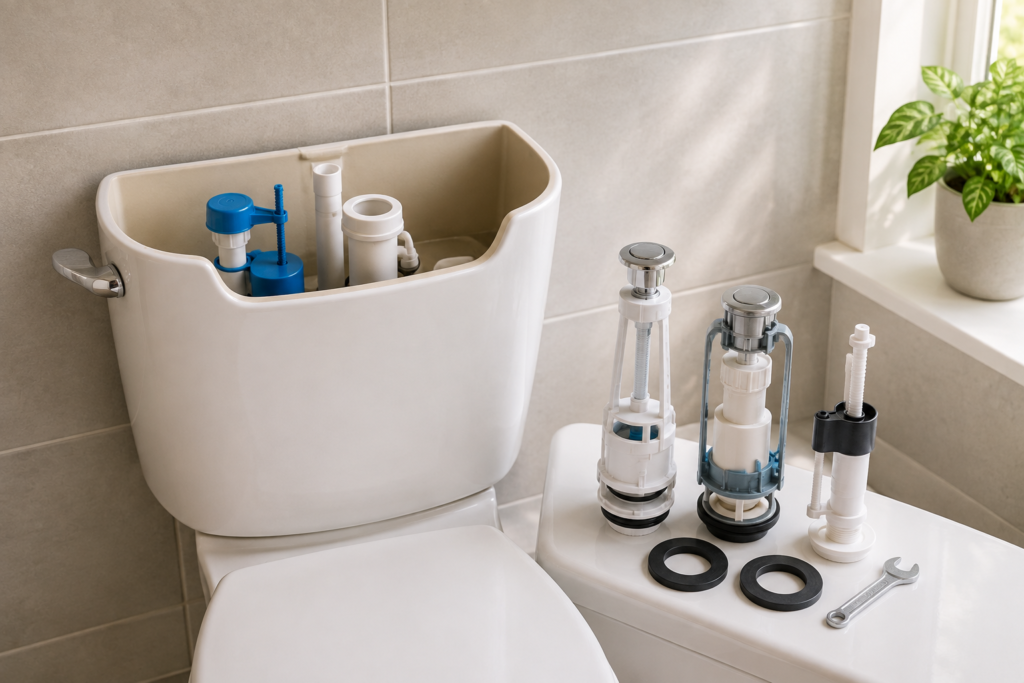
If your toilet keeps running, flushes weakly, does not seal properly after flushing, or has an ageing internal cistern mechanism that keeps needing attention, a flush valve replacement kit is often the part that solves the problem properly.
The difficulty is that not all flush valve kits are equally useful for a DIY repair. Some are better for straightforward like-for-like replacement. Some are more adaptable across different cistern setups. Some are easier for beginners because they come with clearer fittings and fewer awkward surprises. And some buyers end up choosing the wrong kit because they do not first confirm whether the flush valve is actually the faulty part rather than the fill valve, push button or another cistern component.
This guide explains the best toilet flush valve replacement kits in the UK, what matters when choosing one, and when a full replacement kit makes more sense than trying to keep an old failing mechanism going. Because identification and compatibility are the two biggest sources of wasted time in this category, this article includes a quick “is it really the flush valve?” section before the buying advice.
If the wider bathroom has multiple plumbing faults or you are still diagnosing the toilet problem, How to Fix Common Bathroom Plumbing Problems (UK Guide) is the main cluster hub. If you are looking at a broader internal-cistern refresh rather than only the flush valve, Best Toilet Flush Valve & Fill Valve Kits (UK) is the most relevant companion guide.
Quick Recommendation
For most UK homeowners, the best option is a good-quality flush valve replacement kit with broad cistern compatibility, clear fittings, and a design that suits your existing button or lever setup without forcing a difficult workaround.
That is usually the best route because it gives you:
- a more complete repair than patching an ageing valve
- better long-term value than repeatedly adjusting a worn mechanism
- a clearer path for beginners than mixing random individual parts
- a more future monetisation-friendly product decision because many readers do need a full kit rather than one tiny component
- a higher chance of actually solving ghost flushing or poor shut-off properly
For most DIYers, the smartest buy is the kit that matches the cistern and makes installation straightforward, not simply the cheapest valve available.
Product Comparison Table
| Product Type | Best For | Main Strength | Main Weakness | Best Buy For |
|---|---|---|---|---|
| Universal Flush Valve Replacement Kit | Most standard cistern refreshes | Best balance of flexibility and ease | May still need careful compatibility checking | Most homeowners |
| Adjustable Flush Valve Kit | More varied cistern setups | Better fit flexibility | Slightly more fiddly than simple direct replacements | Older or less standard cisterns |
| Push-Button Flush Valve Kit | Button-operated toilets | Better direct compatibility for modern cisterns | Less suitable for non-button setups | Modern bathrooms |
| Dual-Flush Replacement Kit | Water-saving and common modern cisterns | Good fit for common dual-flush systems | Wrong choice if the existing setup differs | Many modern UK toilets |
| Budget Basic Flush Valve Kit | Lowest-cost replacement route | Cheap and accessible | Build quality and fit confidence can vary | Low-priority or simple replacements only |
Best Options Explained
Universal Flush Valve Replacement Kits
This is usually the best place to start for most homeowners.
A universal flush valve kit is useful because it gives you enough compatibility range to suit many ordinary domestic toilets without forcing you into a very specific niche model straight away. It is especially useful when:
- the toilet is fairly standard
- you want a complete flush valve replacement rather than piecemeal repair
- the old mechanism is worn enough that patching it feels like false economy
- you want the simplest practical path to a reliable flush again
This category is often the strongest recommendation for DIYers because it balances availability, compatibility and sensible all-round usefulness.
Adjustable Flush Valve Kits
These are particularly helpful when you are working with an older cistern or a setup that does not look like the simplest modern example. The adjustment flexibility gives you a better chance of making the kit work well without forcing an exact like-for-like part that may be harder to identify.
They suit:
- older toilets
- non-standard internal layouts
- uncertain fit situations where flexibility matters
- DIYers who are happy checking measurements and setup more carefully
Push-Button Flush Valve Kits
A push-button toilet often benefits from a kit that is clearly designed around that operating style. This usually gives better compatibility confidence than a generic-looking product where the button interface feels like an afterthought.
Dual-Flush Replacement Kits
These are very common in UK bathrooms and often make sense where the existing toilet already uses a dual-flush arrangement. A good dual-flush replacement kit can restore flushing reliability while keeping the water-saving function you already have.
Budget Basic Flush Valve Kits
These can still work, but quality and fitting confidence vary more in this category. A very cheap kit may save a little upfront and then cost time and frustration if the fittings or instructions are poor.
How to Choose the Right Option
Confirm that the flush valve is actually the problem
This is the most important step in the whole buying process.
A faulty toilet can be caused by:
- flush valve seal failure
- a worn valve body
- poor shut-off after flushing
- a fill valve issue
- a button or lever mechanism issue
- a more general ageing cistern setup
Common signs the flush valve is the likely culprit include:
- water leaking slowly into the pan after flushing
- ghost flushing
- flush sealing failure
- a mechanism that no longer resets cleanly
If the problem is more about slow refilling than continuous water entering the pan, the fill valve may be the bigger issue instead.
Match the kit to the cistern style
Before buying, check:
- push-button or lever operation
- dual-flush or single-flush setup
- general cistern space and layout
- whether flexibility is needed because the toilet is older or less standard
The best kit is the one that suits the actual cistern, not just the most popular listing online.
Prioritise installation clarity as well as price
A slightly better kit that is easier to understand and fit is often the better value, especially for a beginner repair.
Is It Really the Flush Valve?
Use this quick guide before buying:
| Symptom | More Likely Flush Valve Issue | More Likely Something Else |
|---|---|---|
| Water keeps leaking into the pan after flushing | Yes | Sometimes |
| Toilet “ghost flushes” by itself | Yes | Less likely |
| Flush does not seal cleanly after use | Yes | Less likely |
| Cistern refills very slowly | Less likely | Fill valve more likely |
| Button works awkwardly but no leak into the pan | Sometimes | Button or mechanism issue |
| Entire internal setup looks old and unreliable | Yes | Full refresh may be smarter |
This is the decision point that stops many wasted purchases.
Common Buying Mistakes
Buying a flush valve kit before confirming the fault
This is the biggest one. The wrong part does not become the right fix just because the toilet is misbehaving.
Ignoring push-button or dual-flush compatibility
These details matter more than many beginners expect.
Choosing the cheapest kit without thinking about fit and clarity
A poor-quality kit often creates more work, not less.
Trying to patch a very worn valve instead of replacing it properly
At some point, a complete kit is the more efficient and more durable answer.
Forgetting that a broader cistern refresh may be better value
If several internal parts are ageing, it may make more sense to step up to a broader replacement approach.
When You May Not Need This Product
You may not need a flush valve replacement kit if:
- the real fault is the fill valve
- the push button or lever alone is the problem
- the leak is from the external pan connector or other toilet plumbing
- the whole toilet setup needs a fuller internal refresh rather than just the flush valve
- the issue is not the toilet at all but another bathroom leak
If the fault points more toward a wider internal cistern update, Best Toilet Flush Valve & Fill Valve Kits (UK) is the better next guide. If the concern is general plumbing around the bathroom rather than the toilet internals themselves, How to Fix Common Bathroom Plumbing Problems (UK Guide) should come first.
Related Fix Guides
- How to Fix Common Bathroom Plumbing Problems (UK Guide)
- Best Toilet Flush Valve & Fill Valve Kits (UK)
- Best PTFE Tape and Thread Sealants (UK)
- Best Tap Aerators & Flow Regulators (UK)