Introduction
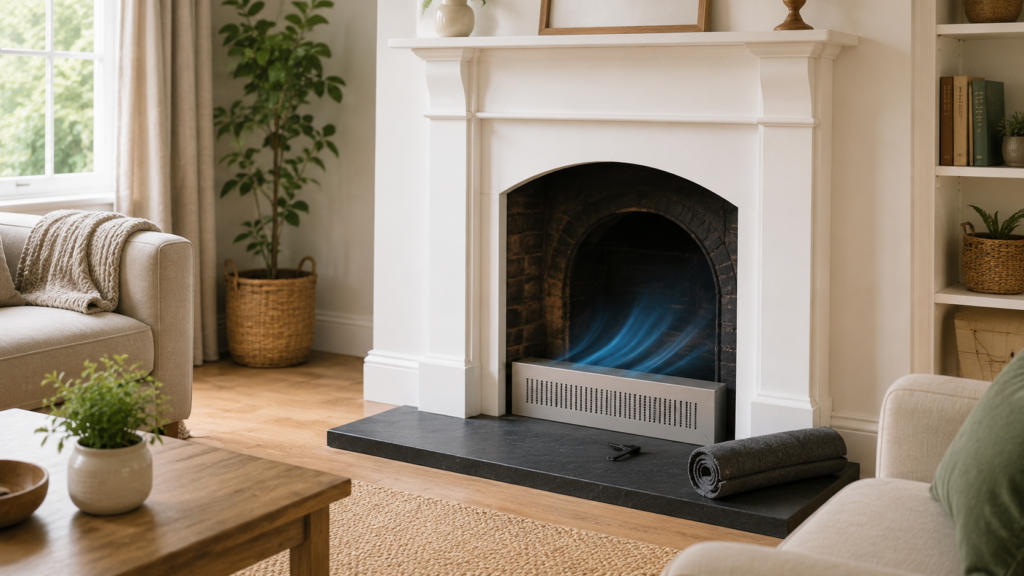
A chimney draught can make a room feel colder than it should, even when the windows and doors seem fine. You may feel a steady movement of cold air near the fireplace, notice the room never feels fully warm in winter, or find that warm air seems to disappear up the chimney as soon as the heating comes on.
The difficulty is that chimneys are not like ordinary wall gaps. You cannot just stuff them full and hope for the best. Some fireplaces and flues still need ventilation, some have already been capped or altered, and some draughts are better reduced with a removable solution rather than a permanent blockage. If you block the wrong thing the wrong way, you can create damp, stale air, or a ventilation problem that is worse than the original draught.
This guide explains how to stop chimney draughts properly without blocking necessary ventilation. It covers how to tell what kind of fireplace or flue you are dealing with, which solutions are safest for common UK homes, and when the issue needs a more cautious approach. A quick “unused fireplace or active flue?” check is included because that is the first decision that stops most mistakes.
If the room has several cold-air problems rather than one obvious chimney issue, How to Identify Hidden Draughts in Your Home is the best wider diagnosis guide to use alongside this article.
Why This Happens
A chimney creates a vertical path between the room and the space above the roof. Even when there is no fire in use, that route can still move air.
Chimney draughts are usually caused by one or more of the following:
- an open unused fireplace
- a chimney breast with an uncapped or poorly managed opening
- a flue drawing air through the room naturally
- warm indoor air rising and pulling colder replacement air into the house
- a previous fireplace that was left partly open after alteration
- an old chimney opening that has no effective draft-reduction method in place
This is why one room can feel colder and more draughty than the rest of the house even when the windows are sealed properly. The chimney is effectively acting like a permanent air route.
At the same time, a chimney or fireplace opening may still need some airflow to avoid stale conditions or dampness in the flue. That is why reducing chimney draughts is usually about controlled blocking or managed draft reduction, not blindly sealing everything solid.
If your house also suffers from wider cold-air movement around doors, loft areas or floors, How to Stop Draughts in Your Home (UK Guide) is the main cluster hub for planning the strongest fixes first.
Tools or Materials You May Need
Depending on the fireplace type and the draft-reduction method, you may need:
- Torch
- Tape measure
- Chimney balloon or chimney draught excluder
- Removable fireplace draft stopper
- Cloth for cleaning dust before fitting
- Gloves
- Notepad or phone photos if checking an older fireplace setup
If you are comparing ready-made products rather than improvising, Best Draught Excluder for Front Doors and other draught product guides in the cluster can help with style comparisons elsewhere in the house, but chimney solutions need to be chosen more specifically than ordinary door products.
Unused Fireplace or Active Flue?
Before doing anything, work out what type of chimney setup you have.
| Situation | What It Usually Means |
|---|---|
| Open fireplace not used anymore | Draft reduction is often possible with a removable solution |
| Fireplace is occasionally used | Do not block it in a way that could be forgotten before use |
| Chimney breast has been altered or partially closed | Check what route still remains open |
| You are unsure whether the flue still needs airflow | Be cautious and avoid permanent blocking |
| The room smells damp or sooty as well as draughty | Ventilation and flue condition both matter |
This matters because the right solution for a never-used fireplace is not always the same as the right solution for a flue that is still used occasionally.
Step-by-Step Fix
Step 1: Confirm the chimney is really the draught source
Before buying a draft stopper, make sure the cold air is actually coming from the chimney opening and not from nearby skirting, window seals or wall gaps.
On a colder day, check:
- around the fireplace opening
- along the hearth edge
- around any old closure plate or infill area
- whether tissue moves near the opening
- whether the cold air is strongest directly in front of the fireplace
If the room feels cold but the airflow is actually stronger near the windows or floor edges, the chimney may only be part of the problem. In that case, How to Identify Hidden Draughts in Your Home should come first.
Step 2: Decide whether you need draft reduction or a more permanent repair
For most homeowners, the safest first solution is a removable draft-reduction method, not a permanent blockage.
That usually means:
- a chimney balloon
- a removable chimney draught excluder
- a fireplace draft stopper placed in the opening
These options are useful because they:
- reduce cold airflow
- are reversible
- are easier to inspect and maintain
- help avoid casual permanent blocking that may be inappropriate
A removable solution is especially useful if the fireplace may ever be used again or if you are not fully certain what the flue arrangement requires.
Step 3: Choose a solution that still respects ventilation needs
This is the most important principle in the whole job.
You are trying to reduce the unwanted room draught, not create a sealed damp void with no airflow at all if the flue still needs some breathability.
For many homes, a chimney balloon or fireplace draft stopper works well because it reduces the air route substantially without encouraging an improvised permanent seal that may be forgotten or poorly managed.
If the chimney setup is older, altered, or uncertain, avoid the temptation to fill it with random insulation or rigid blockages without understanding the consequences.
Step 4: Clean and measure the opening
Before fitting anything, remove loose soot or dust from the immediate fitting area and measure properly.
You want the draft-reduction product to:
- fit the opening correctly
- sit securely
- be removable if needed
- reduce airflow without being forced into place badly
Poor fit is one of the main reasons chimney draft stoppers disappoint.
Step 5: Fit the chosen draft-reduction product properly
Fit the product according to its intended use and check that:
- it sits where it should
- it reduces the air movement clearly
- it can be removed when needed
- it is not likely to be forgotten if the fireplace is ever used again
This is especially important with chimney balloons and similar products. The point is controlled use, not “fit it once and never think about it again”.
Step 6: Recheck the room after fitting
Once the draught route is reduced, recheck the room on a colder day or after the heating has been on.
Look for:
- reduced cold air near the fireplace
- a more even room temperature
- less discomfort near seating areas
- whether the room now reveals another hidden draught source that was previously masked
This happens often. Once the strongest leak is reduced, the next one becomes easier to notice.
Step 7: Watch for signs that the room or flue still needs a better-balanced solution
If the room becomes less draughty but you then notice:
- stale smells
- damp or sooty odours
- moisture issues around the chimney breast
- concerns about occasional future fire use
then the issue may need a more considered long-term setup rather than only a simple plug or stopper.
When This Is Not a DIY Fix
Pause and reassess if:
- you are unsure whether the flue is still active
- the fireplace may be used but has been altered strangely
- there are signs of damp or staining around the chimney breast
- the draught is linked to a larger defect, not just the opening
- there are concerns about blocked ventilation, old soot smell, or flue condition
In those cases, the safest next step may be advice on the flue arrangement rather than stronger and stronger blocking products.
If the room still feels draughty after treating the fireplace opening, How to Draught-Proof a Loft Hatch and How to Stop Cold Air Coming Through Floorboards can be useful companion checks because upper and lower air routes often combine with chimney discomfort.
How to Prevent the Problem
To keep chimney draughts under control without causing other issues:
- use a removable draft-reduction method rather than a casual permanent blockage
- check the fireplace opening before each colder season
- remember to remove any temporary product before fireplace use
- avoid using random stuffing materials as a substitute for a proper chimney draft solution
- review the whole room for other draught sources rather than blaming the chimney for everything
That approach reduces cold air loss while still respecting the fact that chimneys are not ordinary wall gaps.
Quick Checklist Summary
- Confirm the chimney opening is the real source of the draught
- Work out whether the fireplace or flue is unused, active, or uncertain
- Choose a removable draft-reduction method first in most cases
- Reduce the draught without blindly blocking necessary ventilation
- Measure and fit the product properly
- Recheck the room for both reduced airflow and any new moisture or stale-air issues
- If the flue arrangement is unclear, be cautious and avoid improvised permanent sealing
Related Guides
- How to Stop Draughts in Your Home (UK Guide)
- How to Identify Hidden Draughts in Your Home
- How to Draught-Proof a Loft Hatch
- How to Stop Cold Air Coming Through Floorboards
- How to Fix Gaps Under Internal Doors
- Draughts vs Ventilation – What Should You Actually Seal?
- Why Sealing Draughts Can Reduce Condensation