Introduction
A door closer sounds simple: it closes the door after use. But in practice, choosing the right one can make the difference between a door that shuts neatly and one that slams, drags, feels awkward or never closes quite properly.
In UK homes and small workplaces, door closers are usually bought for one of three reasons. You want a door to stop being left open. You want a cleaner, more controlled closing action. Or you need a safer, more dependable self-closing setup for a specific door. The mistake many buyers make is assuming every closer suits every door. In reality, door weight, opening direction, installation position and adjustment quality all matter.
This guide explains the best door closers in the UK, which types suit different doors, and what to prioritise if you want a closer that feels controlled rather than annoying. Because door closers are often bought for the wrong door or the wrong expectation, this article includes a quick suitability guide before the buying advice.
If your issue is really general door hardware performance rather than the absence of a closer, Door Handles, Latches and Hardware Fixes (UK Guide) is the main cluster starting point. If the door does not shut properly even without a closer, How to Fix a Door That Won’t Stay Shut (Latch Alignment) is worth reading before adding any self-closing hardware.
Quick Recommendation
For most domestic UK uses, the best choice is a quality adjustable overhead door closer suited to the door’s weight and location, with controlled closing speed and latching adjustment.
That is usually the best all-round option because it gives you:
- predictable controlled closing
- enough adjustment to avoid slamming
- suitability for a range of internal and some external domestic doors
- a more dependable result than lightweight spring-only solutions
- better long-term usability where the door sees regular traffic
For many homeowners, the best product is not the strongest closer. It is the one that can be adjusted properly for the actual door.
Product Comparison Table
| Product Type | Best For | Main Strength | Main Weakness | Best Buy For |
|---|---|---|---|---|
| Adjustable Overhead Door Closer | Most general-purpose uses | Best mix of control and adjustability | More visible and slightly more involved to fit | Most domestic and light commercial needs |
| Concealed Door Closer | Cleaner appearance | Less visually obvious | More specialised fitting | Better-finish interior projects |
| Spring Door Closer | Basic self-closing on lighter doors | Simple and low cost | Less refined and less controllable | Utility or low-priority doors |
| Hold-Open Door Closer | Areas needing occasional hold-open function | Added convenience | Must suit the use case carefully | Mixed-use practical spaces |
| Heavy-Duty Door Closer | Larger or heavier doors | Better power and control for demanding doors | Can feel excessive on lighter domestic doors | Heavy doors and higher-traffic locations |
Best Options Explained
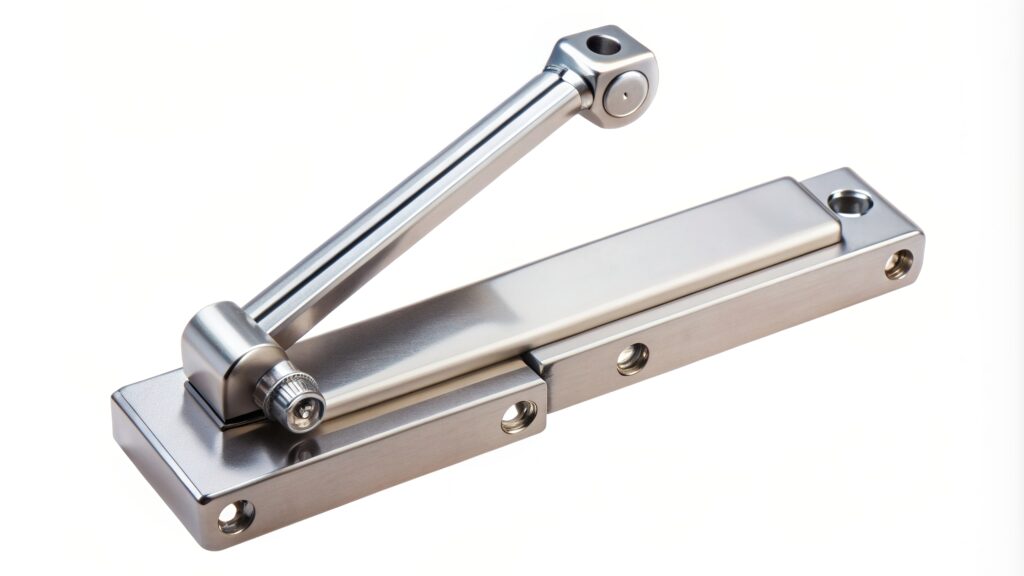
Adjustable Overhead Door Closers
This is the category most buyers should start with.
A decent adjustable overhead closer gives you enough control to set closing speed and final latching action, which is far more useful than simply forcing the door shut. It works well for many domestic and light-duty situations where you want consistency and a proper self-closing action.
They are especially useful when:
- the door is used regularly
- you want a controlled, non-slam close
- the door is medium weight rather than very light
- you want a practical solution rather than a minimal cosmetic one
Concealed Door Closers
These are more about appearance and integration. They can be an excellent choice where you want the self-closing function without the obvious look of an overhead unit, but they are usually less of a casual retrofit item and more of a planned hardware choice.
Spring Door Closers
These are simpler and often cheaper, but they are also less refined. They can be good enough for lower-priority doors where you simply want some self-closing action and do not need especially neat or adjustable behaviour.
They are most useful when:
- the door is relatively light
- the use is basic
- a low-cost simple solution is acceptable
- appearance and precision matter less
Hold-Open Door Closers
Some closers include a hold-open feature, which can be useful in certain settings. The key here is choosing them for the right scenario rather than assuming hold-open is always beneficial.
Heavy-Duty Door Closers
These are designed for heavier, larger or more demanding doors. They can be very effective where appropriate, but on a lighter domestic internal door they may feel overkill if not chosen and adjusted carefully.
How to Choose the Right Option
Start With Door Weight and Use
This is the first question to answer.
Ask:
- is the door light, average or heavy?
- is it internal or external?
- does it get frequent use?
- is it a standard domestic door or something more demanding?
- do you want a neat closing action or simply basic self-closing?
A closer that is too weak may fail to shut the door properly. One that is too aggressive may slam or feel awkward.
Prioritise Adjustability
For most buyers, adjustability is one of the most valuable features. It gives you a better chance of setting the closer so the door shuts firmly without being unpleasant to use.
Think About Installation Position and Appearance
Some people care a great deal about visible hardware and others mainly care about function. That affects whether a standard overhead closer or a more concealed option makes sense.
Door Closer Suitability Guide
Before buying, check the following:
| Check | Why It Matters |
|---|---|
| Is the door internal or external? | Affects demand, exposure and closer strength needs |
| Does the door already shut correctly without a closer? | A closer should not be used to hide alignment faults |
| Is the door light, medium or heavy? | Helps choose the right closer category |
| Do you need adjustable closing and latching speed? | Often the difference between neat closure and slamming |
| Is appearance important, or is function the main priority? | Helps narrow the right product style |
That second point is important. If the door currently rubs, drops or fails to latch properly, fitting a closer before fixing the door itself can create more frustration, not less. In that case, How to Fix a Door That Rubs on the Frame or How to Fix a Door That Won’t Latch Properly should come first.
What Makes a Good Door Closer?
Adjustable Closing Action
A good closer should allow you to fine-tune how the door shuts rather than simply pulling it closed hard.
Suitability for the Door Weight
Correct matching matters far more than broad marketing claims.
Consistent Everyday Feel
A closer should make the door feel controlled, not heavy, slammy or awkward.
Reasonable Installation Practicality
For most DIY users, a product that can be fitted and adjusted sensibly is more valuable than something theoretically excellent but overly fiddly.
Common Buying Mistakes
Using a Closer to Compensate for a Faulty Door
If the door already sticks, rubs or misaligns, fix that first.
Choosing by Price Alone
A poor-quality closer can feel harsh, inconsistent or difficult to adjust well.
Buying Too Strong a Closer for a Light Door
This often produces an awkward user experience.
Ignoring Adjustability
A non-adjustable or very basic closer may not give enough control for real-life use.
Forgetting About the Final Latch Action
A door may swing most of the way shut but still fail at the last part if the closer is not suited or adjusted properly.
When You May Not Need This Product
You may not need a door closer if:
- the real problem is that the door hardware is faulty
- the door only needs strike plate or latch correction
- the door rubs or drags because of alignment
- you simply want the door to stay shut, not self-close
- a catch or latch solution is more suitable than a closer
If the issue is closure rather than self-closing, How to Fix a Door That Won’t Stay Shut (Latch Alignment) and How to Adjust a Strike Plate are often more relevant. If the hardware itself feels poor, Best Mortice Latches for Internal Doors (UK) may be a more useful next product page.
Related Fix Guides
- Door Handles, Latches and Hardware Fixes (UK Guide)
- How to Fix a Door That Won’t Stay Shut (Latch Alignment)
- How to Fix a Door That Won’t Latch Properly
- How to Fix a Door That Rubs on the Frame
- Best Mortice Latches for Internal Doors (UK)
- How to Adjust a Strike Plate