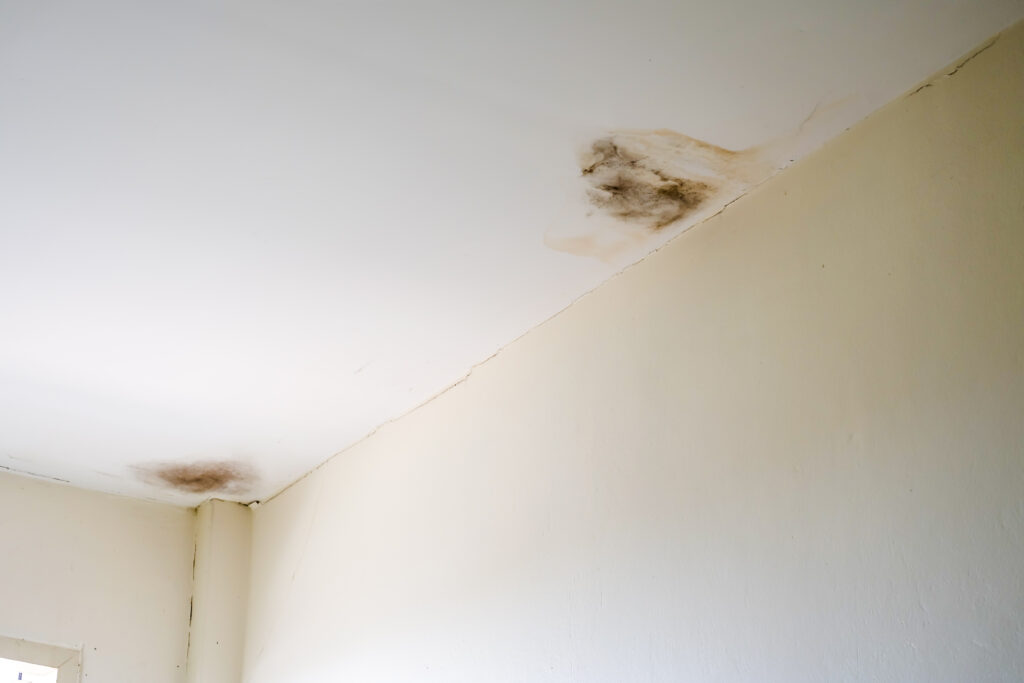
A mouldy bathroom ceiling is one of those problems that can make a home feel unclean — even when you’re doing everything “right.” In most UK homes, it isn’t caused by poor hygiene. It’s caused by moisture staying trapped in the room long enough for mould spores to settle and grow.
The good news is that bathroom ceiling mould is usually controllable once ventilation is improved and the underlying moisture is reduced properly.
If you’re also seeing condensation on windows throughout the house, read how to stop condensation on windows first — the two problems are often linked.
Why Bathroom Ceilings Get Mouldy
Bathrooms produce a large amount of warm, humid air. That steam rises and hits the coldest surfaces first — typically the ceiling and upper corners of external walls.
If that moisture doesn’t dry quickly, mould spores in the air settle and begin to grow.
Common reasons moisture lingers:
- Extractor fan is weak, blocked, or not used long enough
- No extractor fan at all (or it vents into the loft incorrectly)
- Bathroom window stays closed during and after showers
- Standard emulsion paint absorbs moisture
- The ceiling is cold due to insulation gaps above
- The bathroom door is left open during showers, spreading steam to cooler areas
When the ceiling repeatedly stays damp for extended periods, mould becomes predictable rather than random.
Is Bathroom Ceiling Mould a Serious Issue?
In most cases, it is not structural — especially if:
- The mould appears as surface-level spotting
- The paint remains intact
- The ceiling feels dry and solid
However, it becomes more concerning if:
- Paint is blistering or peeling
- The ceiling feels soft or damp
- The mould spreads rapidly beyond the bathroom
- There are brown staining marks or bulging areas
- You suspect a leak from above
Most cases are ventilation-related, but unusual patterns should always prompt a check for leaks.
What to Check Before Fixing Anything
Before treating mould, confirm the room is actually drying properly.
Ask yourself:
- Does your extractor fan actually pull steam out? (Hold tissue up to it.)
- Is the fan grille clogged with dust?
- Does the fan run for at least 15–20 minutes after showers?
- Can you crack a window open briefly after bathing?
- Is the bathroom door closed during showers to contain steam?
- Does the fan vent properly outside (not into the loft)?
If the fan runs for only a few minutes, the room can remain damp for hours — even if surfaces feel dry.
How to Stop Mould Forming on a Bathroom Ceiling
Step 1: Use Ventilation Properly
Run the extractor fan during bathing and for at least 15–20 minutes after. In heavy steam conditions, longer is better.
If you don’t have a timer fan, consider installing one or set a reminder temporarily until it becomes habit.
If your current fan seems weak, see How to Choose the Right Bathroom Ventilation Fan (UK Guide) for guidance.
Step 2: Clean the Existing Mould Safely
Use a mould remover suitable for painted indoor surfaces. Apply gently and avoid soaking the ceiling. Wipe carefully rather than scrubbing aggressively, which can damage paint.
If mould also appears around window frames, see How to Stop Black Mould Around Window Frames.
Step 3: Help the Room Dry Quickly
After showering:
- Open the window briefly if possible
- Keep the bathroom door closed during showering
- Open the door once steam has cleared to allow air circulation
Even in winter, short bursts of ventilation are more effective than leaving a window slightly open all day.
If humidity remains high throughout the house, you may benefit from a dehumidifier. See Best Dehumidifier for Condensation in UK Homes.
Step 4: Improve Conditions If Mould Returns
If mould returns despite correct cleaning and ventilation habits, the problem is likely airflow or insulation related.
Possible upgrades include:
- Installing a stronger extractor fan
- Adding a timer or humidity-controlled fan
- Improving loft insulation above the bathroom
- Switching to mould-resistant bathroom paint
Ongoing mould always indicates ongoing moisture.
Common Mistakes to Avoid
- Painting over mould without removing it properly
- Turning the fan off as soon as you leave the room
- Relying on a small open window in a very steamy bathroom
- Leaving towels or clothes drying in the bathroom permanently
- Assuming mould is “just cosmetic”
Surface cleaning without moisture control only treats the symptom.
When to Stop DIY and Get Advice
Seek further advice if:
- The ceiling is soft, sagging, or damp to touch
- Mould spreads outside the bathroom
- There are visible leak signs from above
- The extractor fan vents into the loft and you’re unsure about ducting
- You notice musty smells elsewhere in the home
At that stage, the issue may go beyond simple condensation control.
Final Reassurance
Bathroom ceiling mould is frustrating, but it is one of the most predictable and preventable problems in UK homes.
The real goal isn’t constant cleaning — it’s preventing the ceiling from staying wet after each shower.
When the room dries quickly and consistently, mould struggles to return. Focus on ventilation first, then product upgrades if needed. Most homes see improvement within weeks once habits change.