Introduction
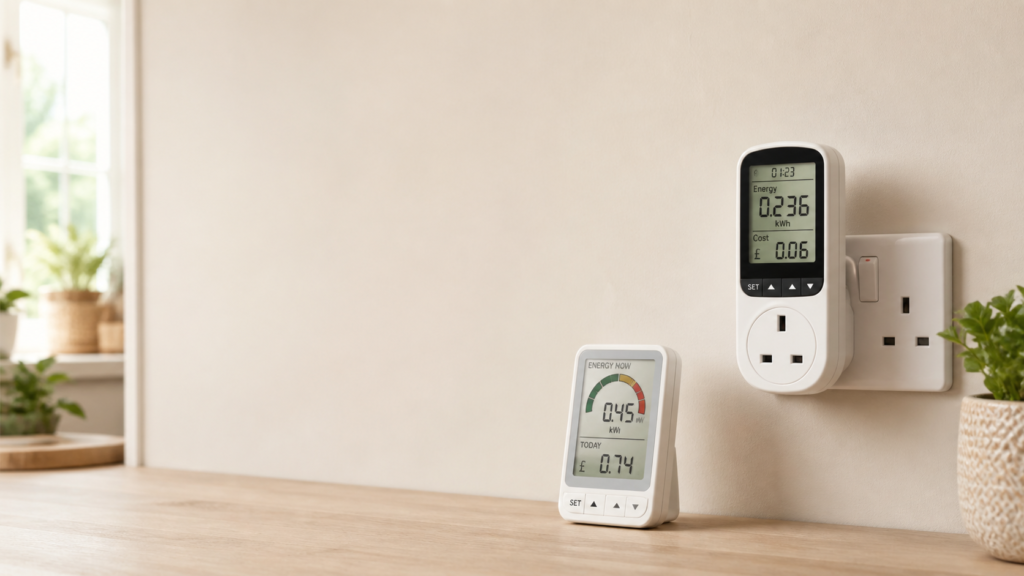
A plug-in energy monitor is one of the simplest tools for answering a question many homeowners now ask more often than they used to: what is this appliance actually costing me to run?
That sounds straightforward, but the value of an energy monitor depends heavily on what you want from it. Some people want a quick answer on a single appliance. Others want to compare several devices around the house. Some want something simple enough for one-off checks. Others want clearer figures, better displays and more usable readings for regular monitoring.
That is why the best plug-in energy monitor is not always the one with the most complicated display. For many households, the most useful option is the one that makes appliance use understandable at a glance and easy enough to keep using without hassle.
This guide explains the best plug-in energy monitors in the UK, which types suit different buyers, and how to choose one that helps you make real decisions rather than just stare at numbers. Because buyers often confuse these with smart plugs or assume every display tells them something useful, this article includes a “when to choose a plug-in monitor instead of a smart plug” section before the buying advice.
If your wider concern is electrical safety or unusual appliance behaviour, Common Electrical Problems in UK Homes (Safe Checks Guide) is the main hub for this cluster. If you want control and scheduling as well as usage information, Best Smart Plugs (UK) (Energy monitoring) is the closest related guide.
Quick Recommendation
For most UK households, the best option is a simple plug-in energy monitor with a clear display, easy-to-read running data, and enough information to help you judge appliance consumption without becoming fiddly or overcomplicated.
That is usually the best recommendation because it gives you:
- direct appliance usage readings
- a clearer sense of which devices are worth caring about
- a straightforward way to compare household electricity use
- less app dependency than a smart plug
- a more focused measurement tool when control and automation are not the goal
For many buyers, the biggest win is not perfect technical detail. It is finally being able to see which appliances are genuinely costly, wasteful or surprisingly cheap to run.
Product Comparison Table
| Product Type | Best For | Main Strength | Main Weakness | Best Buy For |
|---|---|---|---|---|
| Basic Plug-in Energy Monitor | One-off household checks | Simple and affordable | Less feature depth | Most casual users |
| Mid-Range Energy Monitor with Better Display | More regular comparison and tracking | Easier readings and better usability | Slightly higher cost | Most homes wanting real use from the tool |
| Cost-Focused Energy Monitor | Buyers mainly interested in running cost | More decision-friendly for household budgeting | Accuracy of cost use depends on setup and interpretation | Cost-conscious users |
| Multi-Reading Energy Monitor | Users wanting more electrical data detail | Broader visibility | More information than many casual users need | More engaged or repeat users |
| Budget Entry-Level Monitor | Lowest-cost trial use | Cheap and accessible | Screen quality and ease of use can vary | Testing the idea before spending more |
Best Options Explained
Basic Plug-in Energy Monitors
This is the category most homeowners should begin with.
A simple energy monitor is usually enough if your main goal is to plug in one appliance, observe its use, and answer practical questions such as:
- is this heater expensive to run?
- how much is this dehumidifier using?
- is this old fridge worth worrying about?
- how much standby power is this setup pulling?
For many households, that is all the tool needs to do.
Mid-Range Monitors with Better Displays
These are often the best all-round choice because they keep the product simple while making the readings easier to understand. A clearer display and easier interpretation often matter more than extra layers of technical data.
They are especially useful when:
- you plan to check several devices over time
- readability matters
- you want a tool you will keep using rather than one that ends up in a drawer
- you want a better practical experience without overcomplication
Cost-Focused Energy Monitors
These appeal to buyers who care less about watts and more about pounds and pence. They can be very useful if your real question is not “what is the load?” but “what is this costing me?”
They suit:
- budgeting-minded households
- appliance comparisons
- quick cost-based decisions about old or inefficient devices
Multi-Reading Monitors
These are more useful for buyers who want broader data rather than just a rough answer. They can be helpful, but they are not always the best default recommendation for every home. A simpler model with a clearer screen often gets used more.
How to Choose the Right Option
Decide Whether You Want Measurement or Smart Control
This is the biggest buying question.
If you want:
- simple measurement
- no app dependency
- one-off or repeat testing of household appliances
- a clearer view of running cost and power use
then a plug-in energy monitor is often the better buy.
If you also want scheduling and remote switching, Best Smart Plugs (UK) (Energy monitoring) may be a better fit.
Prioritise Display Clarity
A monitor only helps if you can quickly understand what it is telling you. A well-designed screen often matters more than extra layers of data.
Think About the Appliances You Want to Measure
Monitors are most useful when you have actual questions to answer, such as:
- what does this dehumidifier cost to run?
- how much is this heater using?
- is this old appliance wasteful?
- what is this desk setup consuming over time?
That makes the purchase more purposeful and more likely to stay useful.
When to Choose a Plug-in Monitor Instead of a Smart Plug
Before buying, use this simple decision guide:
| Your Main Goal | Better Choice | Why |
|---|---|---|
| I want direct appliance usage readings with no app reliance | Plug-in energy monitor | More focused on measurement |
| I want scheduling and remote switching as well as some usage data | Smart plug | Better for control plus monitoring |
| I want to compare several appliances around the house one by one | Plug-in energy monitor | Simple and practical for moving between loads |
| I mainly want automation rather than energy analysis | Smart plug | Better feature fit |
This distinction avoids a lot of buyer regret.
What Makes a Good Plug-in Energy Monitor?
Easy-to-Read Display
This is often the single most important feature.
Useful Data, Not Just More Data
The best monitor gives information you can use to make decisions.
Sensible Everyday Practicality
If it is awkward to use, it will not get used.
Reliable General Build Quality
This is still an electrical product that should feel properly made.
Common Buying Mistakes
Buying a Monitor Without a Real Question in Mind
The tool is most useful when you have actual appliances you want to assess.
Confusing It With a Smart Plug
A monitor is for measurement first, not control.
Prioritising Technical Complexity Over Readability
More numbers do not always mean more usefulness.
Expecting It to Solve a Safety Problem
If an appliance is overheating, tripping or behaving oddly, this is not the first or only answer.
When You May Not Need This Product
You may not need a plug-in energy monitor if:
- you mainly want scheduling and remote control
- you are unlikely to test more than one device once
- your concern is electrical safety rather than electricity cost
- you already know the problem is a faulty appliance rather than an expensive one
If the real issue is safe use of appliances and sockets rather than energy cost, How to Safely Check for Heat in Plugs and Sockets and What Does ‘Burning Smell’ from Socket Mean? are more urgent guides. If your goal is appliance control plus usage data, Best Smart Plugs (UK) (Energy monitoring) is the better next read.
Related Fix Guides
- Common Electrical Problems in UK Homes (Safe Checks Guide)
- How to Reduce Electric Use from Appliances (Quick Wins)
- Best Smart Plugs (UK) (Energy monitoring)
- How to Safely Check for Heat in Plugs and Sockets
- What Does ‘Burning Smell’ from Socket Mean?
- When to Call an Electrician (Red Flags)