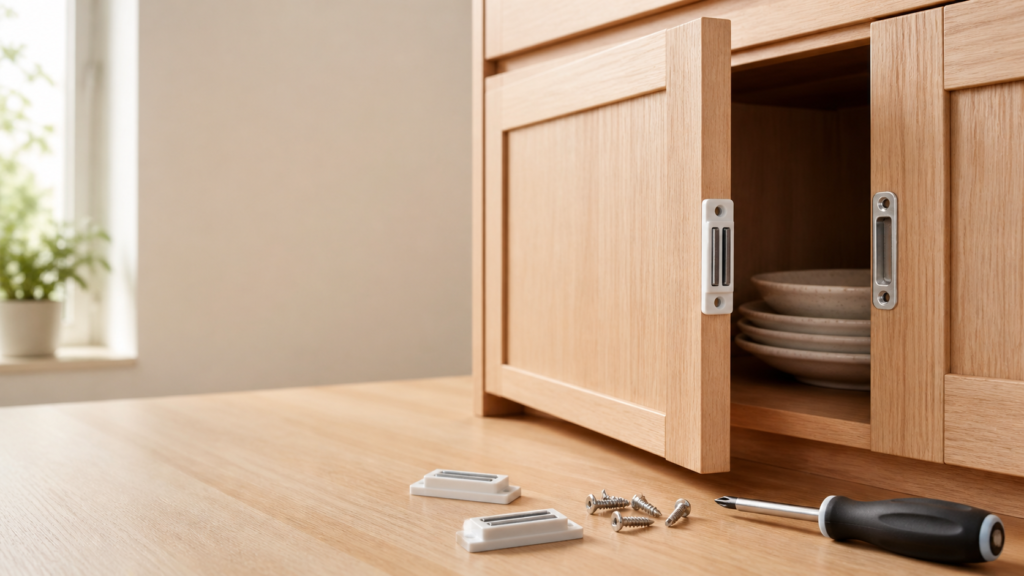
Introduction
If a cupboard or cabinet door keeps drifting open, refuses to stay neatly shut, or feels slightly loose even after hinge adjustment, a magnetic catch is often the simplest part that solves the problem.
That does not mean every cabinet that will not stay closed needs a new catch. Sometimes the door is out of alignment, the hinges are loose, or the cabinet body has shifted slightly. But where the catch itself is weak, badly positioned or worn, the right replacement can make a cabinet feel much tidier and more reliable in daily use.
This guide explains the best magnetic cabinet catches in the UK, what actually matters when choosing one, and when a new catch is worth buying versus when the real fault lies elsewhere. Because this is one of those small hardware categories where buyers often underestimate the difference between a flimsy basic catch and a genuinely useful one, this article includes a quick “catch problem or hinge problem?” section before the buying advice.
If you are diagnosing the wider cabinet issue first, Cupboard & Cabinet Door Fixes (UK Guide) is the main cluster hub for this area. And if the actual problem is a door that still will not stay closed after you have checked the hinges, How to Fix a Cupboard Door That Won’t Stay Closed is the most relevant repair guide before buying hardware.
Quick Recommendation
For most UK cupboards and cabinets, the best option is a compact magnetic catch with a firm hold, solid strike plate, and enough strength for the size and weight of the door without making opening feel awkward.
That is usually the best all-round choice because it gives you:
- a cleaner, more reliable close than weak budget catches
- enough holding force for everyday cupboard doors
- easier fitment in standard kitchen, bathroom and utility cabinets
- better long-term performance than the lightest plastic catches
- a more natural future monetisation fit because readers often need the exact product after diagnosing the fault
The best catch is not always the strongest one. For many cabinets, the right product is the one that holds the door shut consistently without needing a tug every time you open it.
Product Comparison Table
| Type | Best For | Holding Strength | Visibility | Ease of fitting | Notes |
|---|---|---|---|---|---|
| Standard | Most cupboards | Medium | Visible | Easy | Good default |
| Heavy-duty | Heavy doors | High | Visible | Easy-moderate | Stronger pull |
| Concealed | Neat finish | Medium | Hidden | Moderate | Takes more measuring |
Best Options Explained
Standard Magnetic Catches
This is the category most homeowners should start with.
A decent standard magnetic catch is often enough for kitchen units, bathroom cupboards, utility cabinets and many fitted storage doors. When the door is reasonably aligned and the cabinet body is sound, this type usually offers the best balance between holding power, ease of use and fitting simplicity.
It is especially useful when:
- the current catch has weakened with age
- the door opens slightly on its own
- you want a straightforward like-for-like replacement
- the cabinet door is average in size and weight
If the door still sits crooked or rubs before it reaches the catch point, Cupboard & Cabinet Door Fixes (UK Guide) should come first, because a new catch will not fully solve an alignment problem.
Heavy-Duty Magnetic Catches
These are the better option for bigger or heavier cabinet doors that need a firmer hold. They are useful where standard catches feel too weak or where the door sees more vibration, movement or heavier use.
They suit:
- larger cupboard doors
- utility room storage
- heavier fitted doors
- cabinets where lighter catches have already proved inadequate
Stronger is not automatically better, though. On a very light cabinet door, a catch that is too strong can become mildly annoying to use.
Compact Low-Profile Magnetic Catches
These are useful where space is tight or where you want the hardware to be less visible. They are often a smart choice for smaller cabinets, lighter doors, or neater joinery where a bulky catch would look clumsy.
Twin Magnet Catches
These can be very effective where you want more consistent contact across the strike area or where a simple single magnet setup has not felt stable enough. They are especially useful on doors that need a slightly firmer, tidier close.
Budget Plastic Magnetic Catches
These can work in lower-priority locations, but quality varies a lot. This is the category where weak magnets, poor strike plates and lower durability are most likely to disappoint.
How to Choose the Right Option
Start With the Door Weight and Use
This matters more than many people think.
Ask:
- is the cabinet door light or fairly heavy?
- is it opened constantly through the day?
- does it currently fail to stay shut, or just feel a bit loose at the close?
- is the cabinet in a kitchen, bathroom or utility area where moisture and frequent use matter?
A lightly used linen cupboard and a busy kitchen cabinet are not asking the same thing from the hardware.
Check Whether the Door Is Properly Aligned First
This is one of the biggest mistake-prevention points in the whole category.
A magnetic catch works best when:
- the door reaches the closing point cleanly
- the strike plate meets the magnet properly
- the hinges are not allowing the door to sit twisted or low
If the door is obviously misaligned, How to Fix a Cupboard Door That Won’t Stay Closed is the better starting point than product shopping.
Choose Better Build Quality Over Cheapest Price
This is a small hardware category, but better quality still matters. A stronger magnet, better strike plate and cleaner fit can be the difference between a cabinet that feels sorted and one that still feels a bit cheap.
Catch Problem or Hinge Problem?
Before buying, use this quick check:
| Symptom | More Likely Cause | Better First Move |
|---|---|---|
| Door reaches the frame but will not stay shut | Catch weakness or poor contact | Check or replace the catch |
| Door sits crooked or low before reaching the catch | Hinge or alignment issue | Adjust hinges first |
| Door springs open slightly after closing | Catch too weak, badly positioned or door under tension | Check catch position and alignment |
| Door needs pushing up or sideways to close | Hinge or cabinet movement problem | Diagnose fit first |
| Door closes neatly but opens on its own later | Catch issue is more likely | Product replacement may help |
This one check prevents a lot of wasted purchases.
What Makes a Good Magnetic Cabinet Catch?
Suitable Holding Strength
The best catch has enough strength for the door without making everyday opening awkward.
Decent Strike Plate Quality
A poor strike plate can undermine the whole setup, even if the magnet itself is acceptable.
Consistent Contact
The catch should pull the door in neatly and predictably, not only work when the door is pushed exactly right.
Better Build Quality
A well-made catch usually feels firmer, lasts longer and gives a cleaner result.
Common Buying Mistakes
Buying the Strongest Catch Available Without Thinking About Door Size
This often creates a more awkward user experience than needed.
Replacing the Catch Without Checking Alignment
If the door is dropping or twisted, a new catch may not solve the real problem.
Choosing a Very Cheap Catch for a Frequently Used Door
This is where low-cost hardware often feels flimsy and disappointing quite quickly.
Ignoring Moisture-Prone Locations
Bathrooms and utility spaces can be harder on hardware than dry storage cupboards.
Treating Every “Won’t Stay Shut” Issue as a Catch Failure
Sometimes the catch is fine and the hinges or cabinet body are the real cause.
When You May Not Need This Product
You may not need a new magnetic cabinet catch if:
- the current catch is fine but the hinges are loose
- the door has moved out of alignment
- the mounting screws are loose rather than the catch being weak
- the cabinet material around the catch has worn or pulled out
- the problem is a wider door-fit issue rather than the closing hardware itself
If the fault still looks more like a cabinet fit problem than a catch problem, How to Fix a Cupboard Door That Won’t Stay Closed is the best next guide. And if the issue overlaps with general household door hardware rather than cabinetry specifically, Door Handles, Latches and Hardware Fixes (UK Guide) is the most logical cross-cluster read.
Related Fix Guides
- Cupboard & Cabinet Door Fixes (UK Guide)
- How to Fix a Cupboard Door That Won’t Stay Closed
- Door Handles, Latches and Hardware Fixes (UK Guide)