Introduction
A front door is one of the most common places for cold draughts to enter a home, but the best draught excluder depends on where the air is actually getting in.
Some front doors leak at the bottom edge. Some leak around the frame. Some have worn seals on the shut line. Some feel draughty because the threshold is poor, the letterbox is loose, or the door itself is slightly misaligned. That is why buying “a draught excluder” without checking the route first often leads to a product that only partly helps.
This guide explains the best draught excluders for front doors in the UK, what type suits which problem, and when a door-bottom product is the right answer versus when you need something else entirely. Because the biggest mistake in this category is treating every front door draught like a bottom-gap issue, this guide includes a quick “where is the air coming in?” section before the buying advice.
If you have not properly traced the cold air route yet, How to Identify Hidden Draughts in Your Home should be your first stop.
Quick Recommendation
For most UK front doors, the best draught excluder is the product that matches the actual leak point, not simply the thickest under-door excluder you can buy.
In practice, that usually means:
- a door-bottom draught excluder if the air is coming under the door
- a proper replacement seal or weatherstripping if the air is coming around the shut line
- a frame-gap repair if the leak is around the outer door frame
For most buyers specifically looking for a “draught excluder”, the best all-round front-door option is usually a well-fitted bottom-edge excluder or sweep-style product that seals without dragging awkwardly.
That is the most useful starting point because bottom-edge leakage is common, visible and often where homeowners first feel the cold air.
Product Comparison Table
Affiliate disclosure: This post contains affiliate links. As an Amazon Associate I earn from qualifying purchases.
| Product Type | Best For | Main Strength | Main Weakness | Best Buy For |
|---|---|---|---|---|
| Door Bottom Brush or Sweep Excluder | Gaps under the door | Best targeted fix for lower-edge leakage | Won’t solve frame or seal issues | Most obvious under-door draughts |
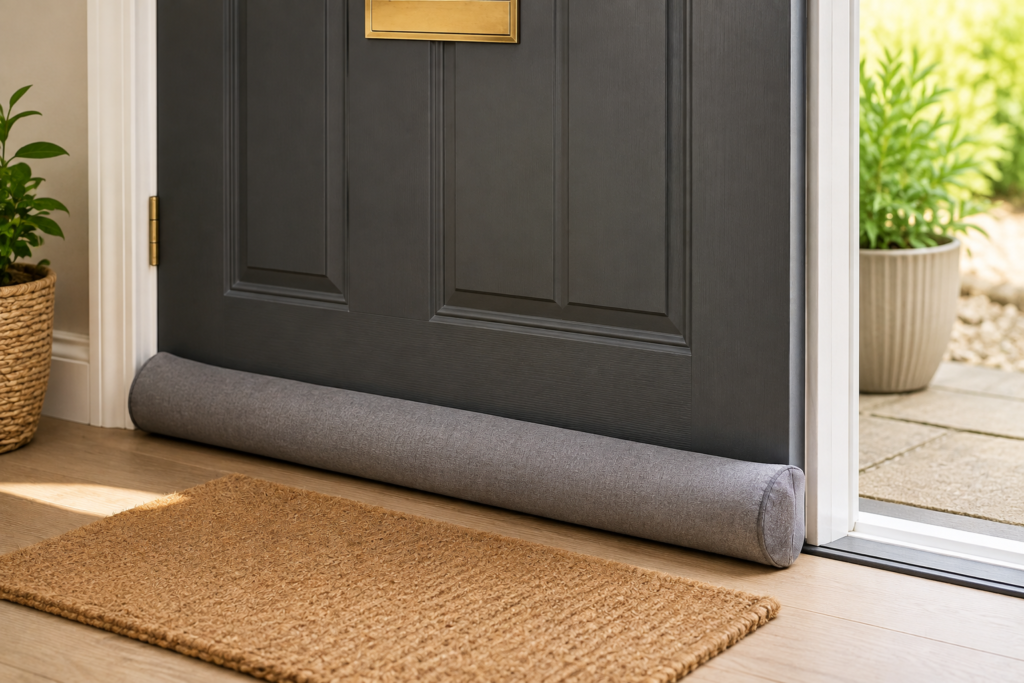
| Twin-Fabric Draft Stopper | Quick, non-permanent fixes | Easy and renter-friendly | Less durable and less neat long-term | Temporary or low-commitment use |
| Adhesive Door Bottom Seal | Simple DIY improvement | Easy to fit | Can wear faster or drag if poorly chosen | Light-to-moderate under-door gaps |
| Threshold Seal System | Larger lower-edge leakage | Better long-term lower-edge sealing | More setup and fit sensitivity | More serious bottom-gap issues |
| Decorative Weighted Excluder | Visible internal use | Easy to move and simple | Least effective as a true fitted seal | Light indoor supplementary use |
Best Options Explained
Door Bottom Brush or Sweep Excluders
This is the most useful starting category for most front door draught complaints.
A well-fitted brush or sweep excluder works by reducing the air gap along the lower edge without needing the door to drag hard across the floor. That makes it a strong option for:
- hard floors
- moderate lower-edge gaps
- recurring cold airflow at ankle height
- homeowners wanting a more fitted, practical result
This type is usually much more useful than a decorative sausage-style excluder when the goal is actually stopping the draught rather than just masking it slightly.
Twin-Fabric Draft Stoppers
These are popular because they are simple and non-invasive. They can work reasonably well where you want a low-effort, removable solution, but they are usually more of a convenience option than the best long-term front-door answer.
They are best for:
- renters
- temporary testing
- lower-priority doors
- situations where you do not want to fit anything permanently yet
Adhesive Door Bottom Seals
These can be a good middle-ground option if the gap is straightforward and the product is matched sensibly to the floor and clearance. They are easy to fit, but the wrong thickness or type can lead to dragging, poor adhesion or a disappointing seal.
Threshold Seal Systems
These are more suitable where the lower-edge leakage is more pronounced or where a better-finished, longer-term result is wanted. They can work very well, but they need better matching to the doorway and are not the fastest casual fix.
Decorative Weighted Excluders
These are better treated as supplementary products than true front-line front-door draft-proofing. They can help a little in some interior situations, but they are not usually the best answer for a genuinely draughty main entrance.
How to Choose the Right Option
Start by identifying the leak point
This is the most important decision in the whole category.
Ask:
- Is the air coming from under the door?
- Is it around the shut line on the sides or top?
- Is it around the outer frame?
- Is the threshold the real issue?
- Does the draught improve if you press the door inward?
If the answer is not clearly “under the door”, a bottom excluder may not be the best first product.
If the air is around the sides or top of a uPVC door, Best Weatherstripping for uPVC Doors is likely more relevant. If it is around the frame itself, How to Seal Gaps Around a Front Door Frame is the better repair guide.
Match the excluder to the floor and gap size
A product that works well on a smooth hard floor may behave differently over carpet, uneven thresholds or larger gaps. Practical compatibility matters more than product marketing.
Decide whether you want temporary or fitted
For a quick seasonal improvement, a removable excluder can make sense. For a true front-door comfort fix, a properly fitted lower seal is often the better long-term option.
Where Is the Air Coming In?
Before buying, use this guide:
| Draught Location | Better First Product Direction | Why |
|---|---|---|
| Under the front door | Bottom excluder or threshold-focused product | Most direct match |
| Around sides and top shut line | Door seal or weatherstripping | Excluder underneath will not solve it |
| Around outer frame | Frame sealing repair | Different problem entirely |
| Letterbox area | Letterbox-specific draught solution | Targeted fix needed |
| Whole door feels loose or badly compressed | Alignment or sealing issue first | Product alone may not solve it |
This quick check prevents a lot of wasted purchases.
Common Buying Mistakes
Buying a bottom excluder when the draught is really from the frame
This is one of the most common reasons people feel disappointed with the result.
Choosing the thickest product available
Thicker is not always better. It can cause dragging, awkward closing or poor fit.
Treating decorative excluders as serious front-door draft-proofing
They may help a little, but they are rarely the strongest true fix.
Ignoring door alignment
If the door does not pull in properly, the real issue may be compression or hinge position rather than the lower gap alone.
Buying before diagnosing the gap size and floor type
The right product depends heavily on both.
When You May Not Need This Product
You may not need a front-door draught excluder as the first fix if:
- the cold air is around the frame
- the side or top seals are worn
- the door has dropped or become misaligned
- the threshold is damaged
- the real discomfort is caused by several nearby draught routes, not the door alone
If the issue is not clearly at the bottom edge, How to Stop a Draught From a Front Door, Best Weatherstripping for uPVC Doors, and How to Adjust uPVC Door Hinges to Stop a Draught are the most useful next reads.