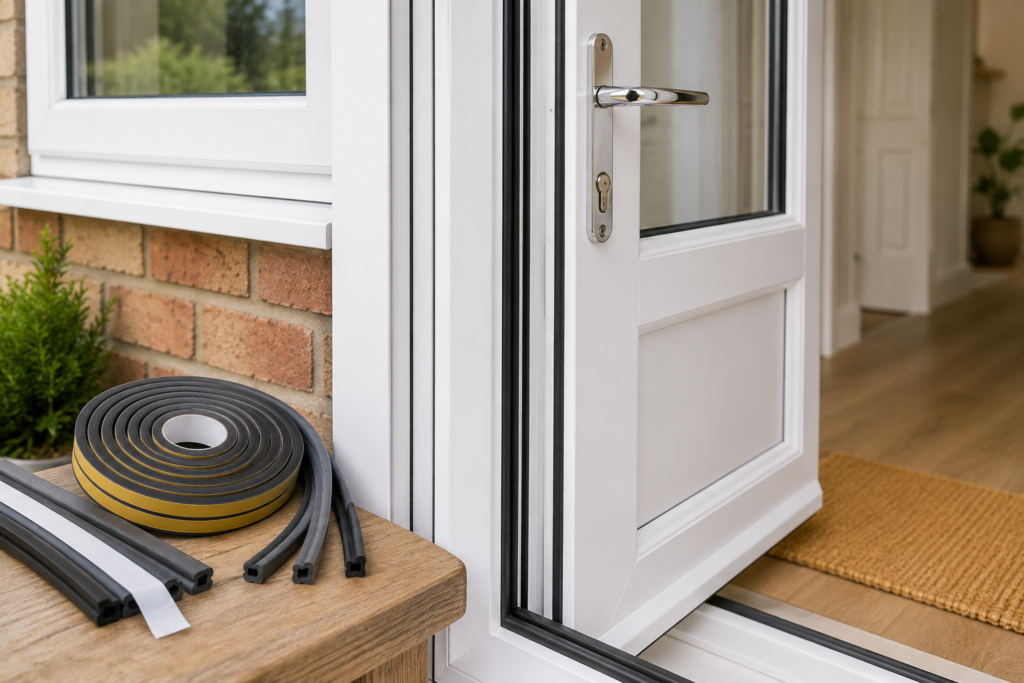
Introduction
If your uPVC door lets in cold air, feels slightly rattly in windy weather, or never seems to shut with the same snug seal it used to, the weatherstripping or door sealing is often the first place to look.
The challenge is that “weatherstripping” gets used loosely. Some people mean the rubber gasket that sits in the door frame or sash. Others mean adhesive foam or stick-on draft-proofing products. Others are really dealing with a misaligned door, a worn threshold seal, or a frame gap rather than a simple strip replacement. That is why buying the right product starts with identifying which sealing method actually suits the door and the problem.
This guide explains the best weatherstripping options for uPVC doors in the UK, what each type is good for, and when a product is worth buying versus when the real issue lies elsewhere. Because misdiagnosis is one of the biggest reasons people waste money in this category, this article includes a quick “what kind of draught is it?” section before the buying advice.
If you have not yet traced where the cold air is entering, How to Identify Hidden Draughts in Your Home should be read first.
Quick Recommendation
For most uPVC doors, the best option is usually a correct replacement rubber door seal or gasket matched to the existing profile, not a generic stick-on strip.
That is the best first recommendation because:
- uPVC doors are typically designed to seal with fitted gaskets
- the right profile gives cleaner compression and a more durable result
- generic adhesive strips are often a workaround, not the ideal repair
- a properly matched seal usually gives a neater, more reliable fit
- future monetisation fits naturally because readers often need the exact sealing product once the diagnosis is clear
If the door has a worn fitted gasket, replacing it properly is usually the better route than adding random foam strips on top.
Product Comparison Table
Affiliate disclosure: This post contains affiliate links. As an Amazon Associate I earn from qualifying purchases.
| Product Type | View on Amazon | Best For | Main Strength | Main Weakness | Best Buy For |
|---|---|---|---|---|---|
| Replacement uPVC Door Gasket / Bubble Seal | View on Amazon | Most genuine seal-wear issues | Best fit for doors designed around a gasket | Must be profile-matched correctly | Most uPVC door seal replacements |
| Flipper / Blade-Type Door Seal | View on Amazon | Specific door profiles needing that shape | Better match on some uPVC systems | Easy to buy the wrong type | Doors with identifiable fitted flipper seals |
| Self-Adhesive Foam Weatherstripping | View on Amazon | Light temporary draft-proofing | Easy to apply | Often not the best long-term fix for uPVC doors | Temporary or secondary sealing only |
| Threshold / Bottom Seal Product | View on Amazon | Bottom-edge draughts | Targets a common cold-air route | Won’t solve side/top seal problems | Door-bottom leakage |
| Premium Replacement Seal Kit | View on Amazon | Homeowners wanting a more complete matched solution | Better overall quality and ease | Higher initial cost | Full seal refresh rather than patch repair |
Best Options Explained
Replacement uPVC Door Gaskets and Bubble Seals
This is the category most uPVC door owners should start with.
A fitted replacement gasket is usually the correct solution when the existing seal is:
- flattened
- brittle
- shrunken
- cracked
- loose in sections
- no longer compressing properly when the door shuts
This type is the best choice because it works with how the door was designed to seal originally. It is especially useful when the draught is along the closing edge of the door rather than around the outer frame.
If the cold air seems strongest around the shut line rather than the frame perimeter, this category is usually more relevant than foam strips or sealant.
Flipper or Blade-Type Seals
Some uPVC doors use a more specific flipper-style or blade-type sealing profile. These can work very well when matched correctly, but they are also easy to buy wrongly if you rely only on vague product descriptions.
They are most useful when:
- the existing seal clearly matches that style
- you are replacing like for like
- the door already sealed well before the original strip wore out
Self-Adhesive Foam Weatherstripping
This is the category many people think of first, but it is not usually the best first recommendation for a properly fitted uPVC door.
It can still be useful:
- as a temporary test fix
- for minor supplementary sealing in certain spots
- where the door design or condition makes a perfect gasket replacement difficult
But in many cases it is acting more like a workaround than the correct long-term repair.
Threshold and Bottom Sealing Products
Some front and back door draughts are worst at the bottom edge. In those cases, the issue may not be the side or top gasket at all. A threshold-focused product can be more useful than replacing the whole perimeter seal if the rest of the door is sealing properly.
Premium Replacement Seal Kits
These are often the best choice for homeowners who want a fuller refresh rather than a quick one-section repair. A better-quality replacement kit can offer more consistent material, clearer profile matching and a more durable end result.
How to Choose the Right Option
Work out where the draught is actually coming from
This is the biggest mistake-prevention step in the whole category.
Ask:
- Is the air coming through the door shut line?
- Is it at the bottom edge only?
- Is it around the outer frame, not the door leaf?
- Does the door seem misaligned or badly compressed?
- Is the seal visibly worn, flattened or missing in places?
If the cold air is coming around the frame-to-wall edge rather than the closing seal, How to Seal Gaps Around a Front Door Frame is more relevant than buying weatherstripping.
Match the existing seal profile before buying
This is the next crucial decision. A uPVC door seal needs to match the profile designed for that system or fitment style. Guessing from a vague product image is one of the easiest ways to waste money.
Treat stick-on strips cautiously on uPVC doors
These can help in limited situations, but they are not always the best answer for a door that already uses fitted gasket sealing.
What Kind of Draught Is It?
Before buying, use this guide:
| Draught Location | More Likely Cause | Better First Product Direction |
|---|---|---|
| Along side or top shut line | Worn fitted gasket | Replacement uPVC door seal |
| Mainly at bottom edge | Threshold or lower seal issue | Bottom seal or threshold-focused product |
| Around outer frame | Failed frame sealing | Frame-gap repair, not weatherstripping first |
| Random around the whole door | Alignment or multiple faults | Diagnose before buying |
| Slightly improved when pressing the door inward | Weak seal compression | Correct replacement gasket likely useful |
That last point is especially useful. If the door seals better when pressed, the gasket or compression is often part of the problem.
Common Buying Mistakes
Buying generic foam strip before confirming the door uses a proper fitted gasket
This is one of the most common mistakes.
Guessing the seal profile
A close match is not always good enough in practice.
Replacing the seal when the door is actually misaligned
If the hinges or compression are wrong, a new seal may only help partially.
Trying to fix frame gaps with door-edge weatherstripping
This often leaves the real air route untouched.
Choosing the cheapest strip available
Seal material quality matters more than many people expect, especially on frequently used external doors.
When You May Not Need This Product
You may not need weatherstripping as the first fix if:
- the door has dropped or shifted
- the main gap is around the frame
- the threshold is the real issue
- the locking or closing pressure is poor because of alignment
- the seal still looks healthy and the airflow is actually from somewhere else
If the door alignment is part of the problem, How to Adjust uPVC Door Hinges to Stop a Draught is the most relevant next guide. If the issue is broader than the seal itself, How to Stop a Draught From a Front Door should come before buying products.