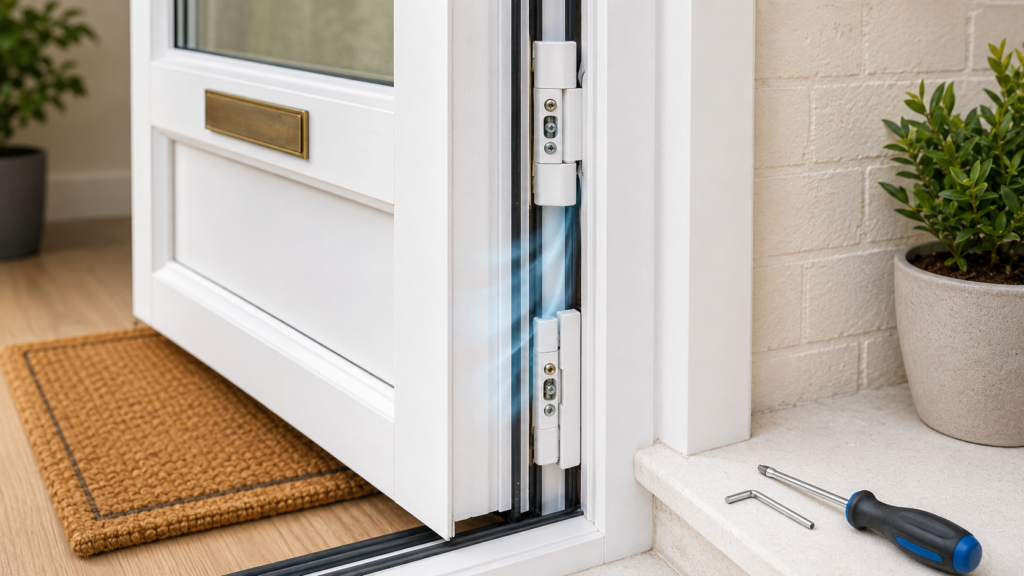
Introduction
If your uPVC door looks closed but still lets cold air in around the sides or top, the problem is not always a worn seal. In many cases, the door has shifted slightly over time and is no longer pressing tightly enough into the frame and gasket.
This is where hinge adjustment can help. A small change in alignment can improve how the door sits in the frame, how evenly the seals compress, and how much air gets through the shut line. The challenge is that people often try adjusting uPVC hinges without first confirming that alignment is really the issue, or they make random changes without checking which direction the door actually needs to move.
This guide explains how to adjust uPVC door hinges to stop a draught in a beginner-friendly way. It covers how to tell whether the hinges are the real problem, what symptoms point toward poor seal compression, and how to make careful adjustments without turning the door into a new problem. A quick “seal issue or alignment issue?” section is included first because that is the step that prevents most wasted effort.
If the cold air is clearly around the outer frame rather than the door shut line, How to Seal Gaps Around a Front Door Frame is the more relevant fix.
Why This Happens
uPVC doors can shift slightly over time because of:
- general wear
- repeated use
- small movement in hinges
- seasonal expansion and contraction
- the door settling out of ideal alignment
When that happens, the door may still latch and lock, but it may no longer press evenly into the rubber seals around the frame. That creates a gap in compression rather than always a visible gap in the door itself.
Typical results include:
- a draught around the side or top edge
- a door that seals better if you pull it inward
- one side feeling looser against the frame than the other
- uneven contact with the gasket
- a handle or lock side that feels less snug than it used to
This is why changing the seals does not always solve the problem. If the door is not pressing into them properly, even a decent gasket may underperform.
If you are still trying to identify the actual draught location, How to Stop a Draught From a Front Door should be read alongside this guide.
Tools or Materials You May Need
Depending on the hinge type, you may need:
- Suitable Allen key or adjustment tool
- Screwdriver
- Torch
- Tissue or thin paper strip for airflow checks
- Cloth to clean around hinge covers if needed
You do not usually need a lot of equipment, but you do need patience and a methodical approach.
If the seals themselves turn out to be flattened or damaged once the alignment is corrected, Best Weatherstripping for uPVC Doors is the most relevant next product guide.
Seal Issue or Alignment Issue?
Before adjusting anything, use this quick check:
| Symptom | More Likely Seal Wear | More Likely Alignment Issue |
|---|---|---|
| Seal looks cracked, shrunk or flattened | Yes | Sometimes |
| Door seals better when pulled inward by hand | Less likely | Yes |
| One side feels looser than the other when closed | Less likely | Yes |
| Draught is even all around and seals are visibly tired | Yes | Possibly |
| Door has become slightly harder to close or latch cleanly | Less likely | Yes |
| New or healthy-looking seals still leak air | Less likely | Yes |
This matters because hinge adjustment is most useful when the problem is poor compression, not just worn rubber.
Step-by-Step Fix
Step 1: Confirm that the draught is around the shut line
Before touching the hinges, check where the cold air is actually coming in.
Use your hand or tissue around:
- the lock side
- the hinge side
- the top edge
- the lower edge
- the outer frame perimeter
You are looking for air around the part of the door that closes against the seals. If the air is around the outer frame instead, hinge adjustment is usually not the main answer.
Step 2: Check whether the door improves when pressed inward
This is one of the strongest clues.
With the door closed, press gently inward near the area where the draught is worst. If the draught reduces noticeably, the door likely needs better compression against the seals.
That points more strongly toward alignment or hinge adjustment than toward a simple bottom excluder or frame-gap repair.
Step 3: Inspect the seals before adjusting
Even if alignment seems involved, quickly inspect the seals too.
Look for:
- flattening
- cracking
- shrinkage
- missing sections
- hard brittle areas
If the seals are badly worn, hinge adjustment may help only partly. In that case, you may need both better alignment and a proper replacement seal.
Step 4: Identify the hinge adjustment points
Most uPVC door hinges allow some degree of movement, but the exact layout varies.
The important beginner principle is not to guess wildly. You want to identify:
- which adjustment changes side-to-side position
- which adjustment changes compression or how tightly the door sits
- whether there is height adjustment if the door has dropped slightly
Make only small changes and test between them.
Step 5: Adjust gradually and check the fit each time
This is not a “big turn and hope” job.
Make a small adjustment, then:
- close the door
- check how it feels against the seal
- test the draught again
- note whether the affected edge improved or worsened
You are aiming for a door that:
- closes comfortably
- compresses the seal better
- reduces the air path
- does not become difficult to latch
Large or repeated random adjustments are the quickest way to create a second problem.
Step 6: Focus on compression where the draught is worst
If the leak is mainly:
- at the top lock side
- along one vertical edge
- near a specific corner
then concentrate on how the door is sitting in that area, not on the idea of making the whole door “tighter” generally.
This is where careful testing matters more than speed. Often only a modest change is needed to improve the contact pattern noticeably.
Step 7: Re-test with tissue and real use
Once the adjustment seems better, test the door properly.
Check:
- whether the draught has reduced
- whether the seal contact feels more even
- whether the handle still operates cleanly
- whether the door latches and locks without awkward force
- whether closing pressure now feels more consistent
It is important to test both the comfort improvement and the general function. A door that seals better but becomes difficult to use is not a finished fix.
When This Is Not a DIY Fix
Hinge adjustment may not be the right answer, or not the full answer, if:
- the outer frame is leaking
- the seals are heavily worn
- the door has dropped more seriously
- the hinges or fixings are damaged
- the threshold is the main draught source
- the frame itself is loose or poorly installed
In those cases, adjustment may help only partly or may be the wrong first move.
If the door still feels draughty after improving alignment, Best Weatherstripping for uPVC Doors is the next logical product guide. If the hall remains cold more broadly, How to Stop Cold Air Coming Through Floorboards can also matter because entrance-area discomfort often comes from several combined leaks.
How to Prevent the Problem
To keep a uPVC door sealing properly over time:
- check for early signs of draughts before winter
- do not ignore a door that starts feeling looser against the frame
- inspect the seals regularly
- avoid forcing a door shut if it is clearly misaligned
- deal with modest alignment changes before they become bigger comfort problems
A uPVC door does not have to look badly off to leak air. Small changes in compression are often enough to make the hallway feel noticeably colder.
Quick Checklist Summary
- Confirm the draught is around the door shut line, not the outer frame
- Check whether pressing the door inward improves the seal
- Inspect the gasket before assuming hinges are the only issue
- Identify the hinge adjustments carefully rather than guessing
- Make small changes and test the door each time
- Aim for better seal compression without making the door awkward to close
- If the seals are worn or the frame leaks, hinge adjustment may only be part of the fix
Related Guides
- How to Stop Draughts in Your Home (UK Guide)
- How to Stop a Draught From a Front Door
- How to Identify Hidden Draughts in Your Home
- How to Seal Gaps Around a Front Door Frame
- Best Weatherstripping for uPVC Doors
- Best Draught Excluder for Front Doors
- How to Stop Cold Air Coming Through Floorboards