Introduction
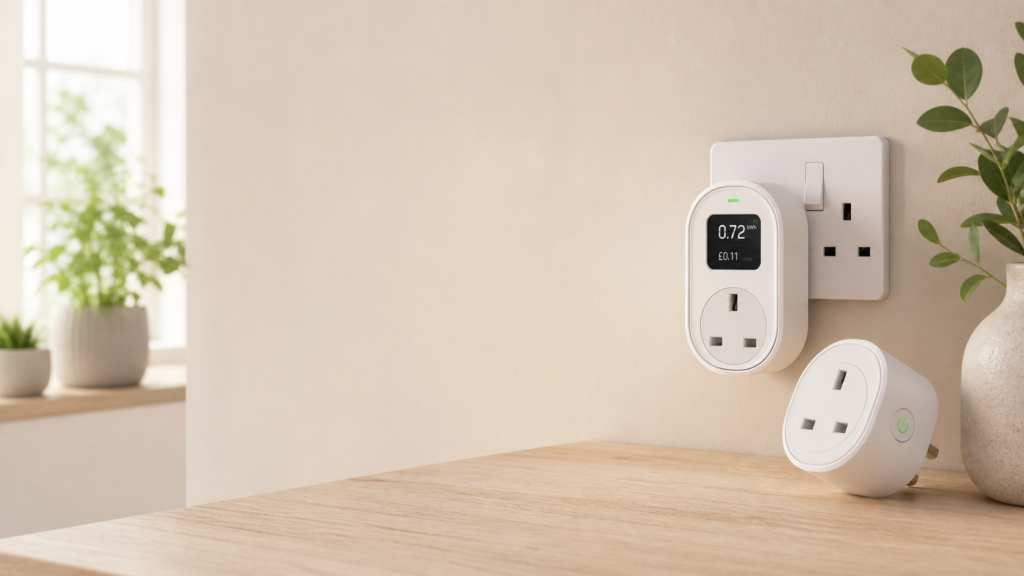
If you want an easier way to see what appliances are costing to run, automate schedules, or stop devices wasting electricity when they do not need to be on, a smart plug can be a very useful buy.
The problem is that many smart plugs are sold as if they all do the same thing. They do not. Some are mainly about remote on/off control. Some are genuinely useful for tracking energy use. Some are compact and well-suited to everyday household use. Others are bulky, awkward, app-dependent or light on the monitoring detail people actually want.
That matters because the search intent behind this topic is usually not just “show me some smart plugs”. It is closer to: which smart plugs are actually worth buying in the UK if I want energy monitoring that is useful, reliable and easy to understand? This guide is built around that question.
It explains the best types of smart plugs for UK homes, what energy-monitoring features matter in real use, and when a smart plug is the right purchase versus when you would be better off with a more dedicated measuring tool. Because buyers often confuse energy-monitoring smart plugs with simple timers or with true plug-in energy monitors, this guide includes a quick “smart plug vs energy monitor” decision section before the buying advice.
If your wider concern is general household electrical safety rather than only smart control, start with Common Electrical Problems in UK Homes (Safe Checks Guide). If your main goal is deeper electricity tracking rather than switching and automation, Best Plug-in Energy Monitors (UK) is the most relevant companion guide.
Quick Recommendation
For most UK households, the best choice is a compact smart plug with accurate enough energy monitoring, a stable app, clear scheduling controls, and sensible compatibility with the voice assistant or ecosystem you already use.
That is usually the best all-round option because it gives you:
- simple switching and scheduling
- practical energy-use visibility for everyday appliances
- a more useful view of standby waste and usage habits
- a product that is easy to live with rather than just impressive on the box
- a cleaner path to future energy-saving routines without overcomplicating the setup
For most buyers, the key is not finding the “smartest” plug. It is finding one that monitors energy use clearly and works reliably enough that you actually keep using it.
Product Comparison Table
| Product Type | Best For | Main Strength | Main Weakness | Best Buy For |
|---|---|---|---|---|
| Compact Smart Plug with Energy Monitoring | Most households | Best balance of size, control and energy data | May not suit very bulky adjacent plugs | Most UK buyers |
| Ecosystem-Focused Smart Plug | Homes already using one smart home platform | Easier integration and automation | Less flexible if you switch platforms later | Existing smart home setups |
| Budget Energy-Monitoring Smart Plug | Entry-level use | Lower cost and simple savings tracking | App quality and data depth can vary | Basic first-time buyers |
| Premium Smart Plug with Better Reporting | More regular tracking and automation | Better app experience and clearer history | Costs more | Users who want to monitor usage actively |
| Outdoor-Capable Smart Plug | External controlled loads | Useful for outdoor devices in suitable conditions | Less relevant for general indoor energy tracking | Outdoor lighting or seasonal use |
Best Options Explained
Compact Smart Plugs with Energy Monitoring
This is the category most people should start with.
A compact smart plug that includes energy monitoring is usually the best fit for everyday domestic use because it handles the two things most buyers actually want: easy control and usable energy data. It can help you understand how much a dehumidifier, portable heater, fan, desk setup or kitchen appliance is really using over time.
This type is especially useful when you want to:
- schedule appliances sensibly
- reduce standby use
- see which devices are actually worth worrying about
- avoid wasting socket space with an oversized plug body
If your main motivation is reducing running costs from real household use rather than gadget automation for its own sake, How to Reduce Electric Use from Appliances (Quick Wins) is the most relevant supporting guide in this cluster.
Ecosystem-Focused Smart Plugs
These are the best choice if you already know your household is built around one smart ecosystem. They tend to be easier to set up and easier to automate if you are already using compatible devices, routines or voice control.
They suit:
- homes already using one main smart home system
- buyers who want simple app and voice integration
- users likely to build routines around several devices
The key question here is not whether the plug is “good” in isolation. It is whether it works smoothly in the system you already use.
Budget Smart Plugs with Energy Monitoring
These are tempting, and some are perfectly decent for light use. They can be a good entry point if you simply want to test whether smart control and electricity monitoring are useful in your home before buying more than one.
However, cheaper models are more likely to vary in:
- app stability
- reporting detail
- long-term reliability
- physical size and design quality
They can still be worthwhile, but this is a category where a slightly better product often gives a noticeably better ownership experience.
Premium Smart Plugs with Better Data and Automation
These are better suited to buyers who genuinely plan to use the monitoring data rather than just glance at it once. Better apps, clearer history, smoother automations and more dependable control can justify the higher price if you are using the plug often.
Outdoor-Capable Smart Plugs
These are more specialist, but useful where controlled outdoor loads are part of the plan. They are less about energy-monitoring-first buying and more about broader switching use in suitable exterior settings.
How to Choose the Right Option
Decide Whether You Want Control, Monitoring, or Both
This is the most important question.
Some buyers mainly want scheduling. Others mainly want energy data. The best product depends on which matters more. If you only want accurate electricity readings, a dedicated monitor may be better. If you want both energy awareness and automation, a smart plug is often the right choice.
Check the Physical Size
This is one of the most annoying real-world issues with smart plugs. A bulky plug can block adjacent sockets or feel awkward in common UK extension blocks or wall outlets. A compact design is often worth paying for.
Think About App Quality and Data Clarity
A smart plug is only as useful as the information it gives you. Clear daily or historical usage data is much more useful than vague “energy stats” that tell you very little.
Match the Plug to the Appliance Type
Smart plugs are most useful on appliances where control and visibility genuinely help, such as:
- dehumidifiers
- desk electronics
- lamps
- routers
- entertainment gear
- occasional heaters used cautiously within the product’s ratings
If the appliance is a high-load device, safety and suitability matter more than smart features.
Smart Plug vs Plug-in Energy Monitor
Before buying, ask yourself which tool actually fits your goal.
| Your Main Goal | Better Choice | Why |
|---|---|---|
| I want scheduling and remote control as well as basic energy tracking | Smart plug with energy monitoring | Gives both control and data |
| I mainly want to measure appliance running cost clearly | Plug-in energy monitor | Usually more focused on measurement |
| I want to automate low-power household devices | Smart plug | Best suited to switching and routines |
| I want the clearest possible understanding of usage without app dependency | Plug-in energy monitor | Often simpler and more direct |
This one distinction prevents a lot of buyer disappointment.
What Makes a Good Smart Plug for Energy Monitoring?
Clear Energy Data
A good product should give you data you can actually use, not just a vague dashboard that looks modern but tells you very little.
Stable App and Reliable Switching
If the app is clumsy or the switching unreliable, the product stops being helpful very quickly.
Compact Design
In UK homes, physical practicality matters.
Good Routine and Scheduling Options
Timers, schedules and basic automation are where much of the actual value comes from.
Sensible Compatibility
Buying into a platform you already use usually makes more sense than chasing every possible feature.
Common Buying Mistakes
Buying a Smart Plug When You Really Want a Dedicated Energy Monitor
This is one of the most common errors. The smart plug is more about control plus monitoring, not pure measurement first.
Ignoring Physical Size
A bulky plug that blocks other sockets becomes irritating quickly.
Focusing Only on App Screenshots
A nice-looking app means very little if the data is poor or the control is unreliable.
Using Smart Plugs as a Shortcut Around Bad Electrical Habits
A smart product does not make an overloaded extension lead or unsuitable setup safe.
Expecting Every Appliance to Benefit
Some devices are worth monitoring closely. Others are not worth the effort.
When You May Not Need This Product
You may not need a smart plug if:
- you only want to measure electricity use once or twice
- you do not actually need remote control or scheduling
- the appliance is not suitable for this kind of switching arrangement
- your real issue is electrical safety, overheating or poor socket condition
- a dedicated monitor would answer the question more clearly
If your main concern is energy measurement rather than automation, Best Plug-in Energy Monitors (UK) is the better next guide. If the issue is safe socket or extension use, Best Extension Leads (UK) (Safety-first) and How to Safely Check for Heat in Plugs and Sockets are more important reads than buying another smart device.
Related Fix Guides
- Common Electrical Problems in UK Homes (Safe Checks Guide)
- How to Reduce Electric Use from Appliances (Quick Wins)
- Best Plug-in Energy Monitors (UK)
- Best Extension Leads (UK) (Safety-first)
- How to Safely Check for Heat in Plugs and Sockets
- When to Call an Electrician (Red Flags)