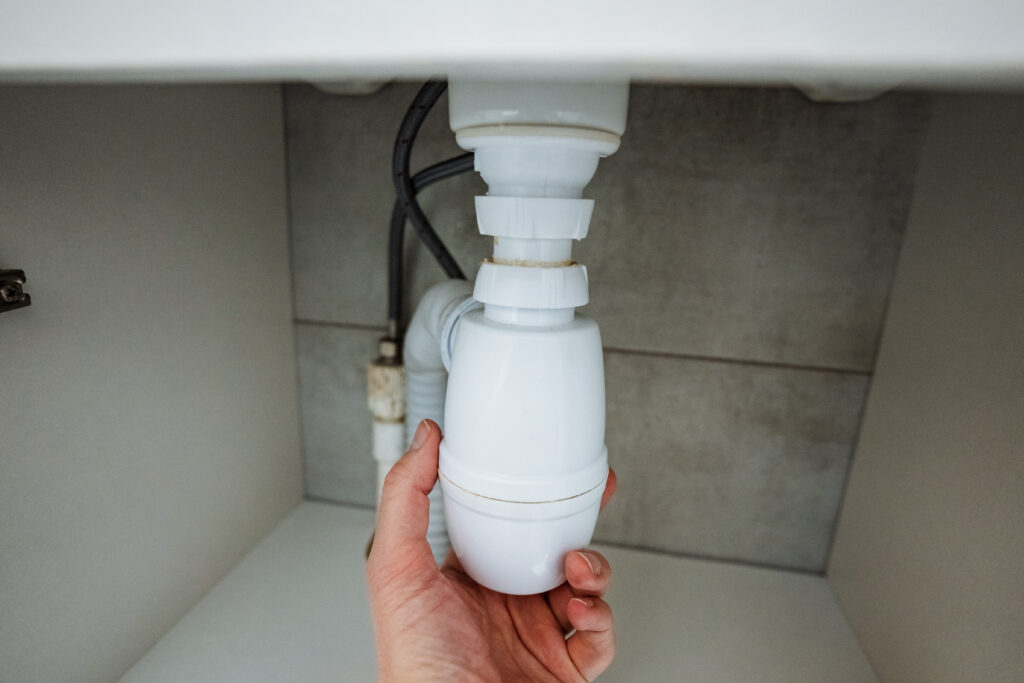
If you’ve noticed water under your basin or a damp cabinet floor, the waste trap is usually the culprit.
Bathroom waste traps (the curved pipe under the sink) are designed to hold water and block sewer gases. Over time, seals loosen, washers degrade, or fittings crack — leading to leaks.
The good news: most waste trap leaks are simple to fix without specialist tools.
In this guide, you’ll learn how to identify the leak source, fix it correctly, and prevent it returning.
If you’re troubleshooting multiple issues, see How to Fix Common Bathroom Plumbing Problems (UK Guide)
What Is a Waste Trap?
A waste trap (often called a U-bend or P-trap) is the curved section of pipe beneath your basin.
Its purpose is to:
- Hold a small amount of water
- Prevent foul smells from rising
- Allow access for clearing blockages
Most UK bathroom traps are plastic compression fittings, designed for easy removal.
Step 1 – Identify the Leak Source
Before dismantling anything, dry the pipework thoroughly with a cloth.
Then:
- Run the tap for 30–60 seconds
- Watch carefully for moisture
- Check all joints and connections
Common leak points:
- Compression joints
- Slip nuts
- Washer seals
- Hairline cracks in plastic
- Connection to basin waste
Identifying the exact source prevents unnecessary dismantling.
Tools You Will Need
- Bucket
- Old towels
- Adjustable spanner (rarely needed for plastic)
- Replacement washers (if required)
- PTFE tape (for threaded metal fittings only)
Most bathroom traps are hand-tightened plastic.
Avoid using excessive force.
Fix 1 – Tighten Loose Compression Fittings
The simplest cause is a slightly loose joint.
Step 1 – Place Bucket Underneath
There will always be some residual water.
Step 2 – Hand-Tighten the Slip Nut
Turn clockwise by hand until snug.
Do not overtighten plastic — this can distort the washer and worsen leaks.
Test again by running water.
If leaking continues, move to the next step.
Fix 2 – Reseat or Replace the Washer
Inside each compression joint is a conical rubber washer.
Over time these can:
- Perish
- Flatten
- Shift position
- Become misaligned
Step 1 – Dismantle the Trap
Unscrew the slip nut.
Separate the joint carefully.
Step 2 – Inspect the Washer
Check for:
- Cracks
- Warping
- Flattening
- Debris build-up
If damaged, replace with identical size.
If intact, clean and reseat correctly.
Step 3 – Reassemble Carefully
Ensure the washer:
- Sits squarely
- Faces the correct direction (taper towards fitting)
Hand-tighten only.
Run water and check again.
Fix 3 – Replace a Cracked Trap
Plastic traps can crack due to:
- Overtightening
- Age
- Impact
- Chemical drain cleaner damage
If you see visible cracking, replacement is the only proper fix.
Replacement traps are inexpensive and widely available in UK DIY stores.
Match:
- Pipe diameter (usually 32mm or 40mm)
- Type (P-trap, bottle trap, etc.)
Fix 4 – Leak at the Basin Waste Connection
If the leak is at the top of the trap where it connects to the basin waste:
- Check the back nut
- Ensure the sealing washer is present
- Confirm the waste fitting itself is secure
If water leaks from the basin flange area, the basin waste may need resealing.
See Best Bathroom Silicone Sealants (UK)
Common Mistakes to Avoid
- Using PTFE tape on plastic compression fittings
- Overtightening slip nuts
- Reusing damaged washers
- Ignoring slow leaks
- Using excessive chemical drain cleaners
Chemical cleaners can weaken seals and plastic over time.
If your trap is frequently blocked, see How to Unblock a Bathroom Sink (Without Chemicals First)
When to Call a Plumber
Seek professional help if:
- The leak is inside the wall
- Pipework is metal and corroded
- Water damage is extensive
- You cannot isolate water supply
Most under-basin leaks are DIY-friendly, but hidden leaks are not.
Preventing Future Leaks
To reduce future issues:
- Avoid overtightening during cleaning
- Clean traps annually
- Check joints after clearing blockages
- Avoid harsh drain chemicals
Routine inspection prevents cabinet damage and mould.
Quick Checklist
If fixing a leaking waste trap:
- ✔ Dry pipework and locate leak precisely
- ✔ Tighten joints by hand first
- ✔ Replace worn washers if needed
- ✔ Replace cracked traps entirely
- ✔ Test thoroughly after reassembly
Related Guides
- How to Fix Common Bathroom Plumbing Problems (UK Guide)
- How to Unblock a Bathroom Sink (Without Chemicals First)
- Best Bathroom Silicone Sealants (UK)
- How to Fix a Dripping Tap (Washer vs Cartridge)
- How to Fix Low Water Pressure in Bathroom Taps
A leaking waste trap is rarely a major plumbing failure.
It is usually a loose joint or worn washer.
Diagnose carefully, tighten correctly, replace what’s worn — and the leak should stop completely.