Introduction
A blocked bathroom sink is annoying, messy and very easy to make worse if you go straight for the wrong fix.
Many people pour chemical drain cleaner down the waste as their first move, only to find the blockage barely improves and the sink, trap and pipework are now full of harsh liquid that makes the next step nastier and less safe. In most bathroom sinks, the blockage is usually caused by hair, soap residue, toothpaste sludge or a build-up in the trap, which means a mechanical or manual fix is often the better first choice.
This guide explains how to unblock a bathroom sink without chemicals first, using the safest and most effective beginner-friendly methods in the right order. It also shows you when the blockage is likely to be in the trap, when a plunger is worth trying, and when the problem may be further down the waste line. A simple blockage-location checklist is included because that helps you choose the right first move instead of trying everything at random.
If the sink is leaking under the basin as well as draining badly, How to Fix a Leaking Bathroom Waste Trap should be read alongside this guide.
Why This Happens
Bathroom sinks usually block because of slow build-up rather than one dramatic object causing an instant stop.
The most common causes are:
- hair collecting in the waste
- soap and toothpaste residue building up
- debris trapped in the waste plug or top section
- sludge in the trap below the sink
- repeated minor build-up that gradually reduces flow
Unlike kitchen sinks, bathroom sinks are less often blocked by grease and food. That is why a more targeted, mechanical approach often works better than reaching straight for a strong chemical product.
If you want tools that actually suit this kind of blockage, Best Drain Unblocker Tools (Plunger, Snake) (UK) is the most relevant supporting product guide.
Tools or Materials You May Need
For a chemical-free first attempt, you may need:
- Rubber gloves
- Old towel or cloths
- Bucket or bowl
- Plunger suitable for sinks
- Simple drain snake or hair remover tool
- Adjustable spanner if the trap needs opening
- Hot water, but not necessarily boiling water on delicate fittings
- Torch
You do not need every item for every blockage. The right method depends on where the blockage most likely is.
Quick Blockage Location Check
Before you start, use these clues to narrow the blockage down.
| Symptom | Most Likely Location |
|---|---|
| Water drains slowly but eventually clears | Early build-up in waste or trap |
| Sink is fully blocked but no leak underneath | Waste, trap or slightly beyond |
| Bad smell plus slow drainage | Trap or accumulated residue |
| Gurgling and repeated slow drainage | Partial blockage further along the waste |
| Basin empties better after plunging briefly, then slows again | Hair or sludge not fully removed |
| Water leaks under sink when draining | Trap or connection issue as well as blockage |
This matters because the quickest fix for a hair-clogged trap is not always the same as the best fix for a deeper waste-line blockage.
Step-by-Step Fix
Step 1: Remove visible debris from the plug and waste opening
Start with the simplest check.
Take out the plug or pop-up fitting if it is removable and inspect the waste opening. In many bathroom sinks, hair and residue collect right at the top.
Remove any visible debris by hand with gloves or a simple tool. This is often unpleasant, but it is also one of the highest-value first steps because it deals with the easiest blockage point immediately.
If the sink starts draining better after this, you may have solved most of the problem already.
Step 2: Flush with hot water
Once the top debris is cleared, try flushing the sink with hot water.
This can help move:
- soap residue
- loosened toothpaste sludge
- light greasy build-up
- disturbed debris from the upper waste
Do not assume hot water alone will solve a true blockage, but it is a useful early step after clearing the visible waste opening.
Step 3: Use a sink plunger
If the sink is still draining slowly or not draining at all, a sink plunger is usually the next best move.
To use it properly:
- ensure there is enough water in the basin to cover the plunger lip
- block any overflow opening if practical
- create a good seal over the waste
- plunge steadily rather than wildly
The aim is to create pressure and movement in the blockage, not just splash water around.
A good plunger is often very effective on simple local obstructions. If you need buying help, Best Drain Unblocker Tools (Plunger, Snake) (UK) covers the most useful options.
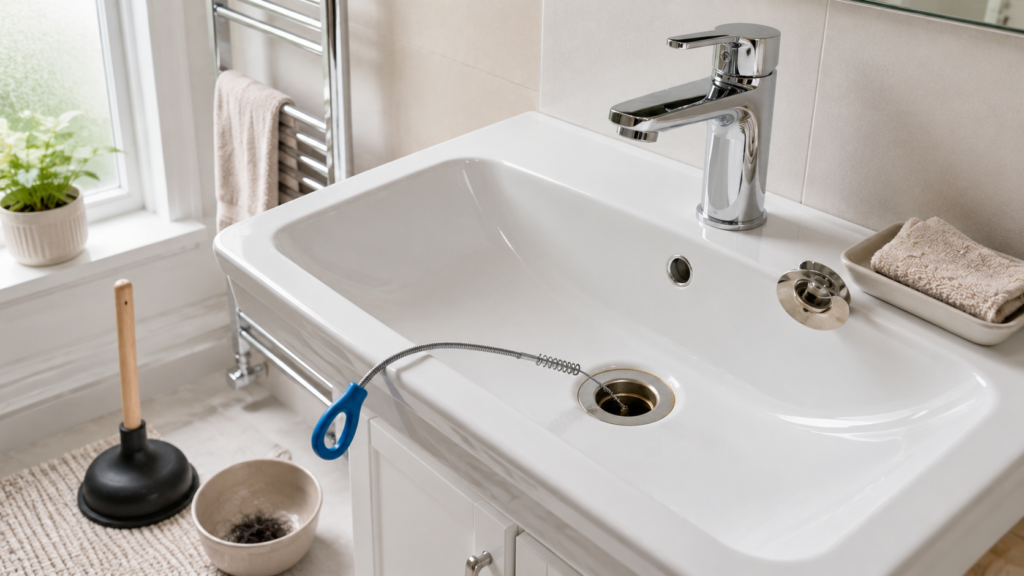
Step 4: Use a drain snake or hair-removal tool
If plunging helps only slightly, or if hair is the likely cause, a drain snake or flexible hair-removal tool is often the best next step.
This is especially effective where:
- the sink is in a bathroom rather than a kitchen
- long hair is likely involved
- the blockage feels close rather than deep in the branch waste
- the slow drainage keeps returning after a basic flush
Feed the tool carefully into the waste, rotate or work it gently, and remove the collected debris.
This is one of the most effective chemical-free methods for bathroom sinks because hair is such a common cause.
Step 5: Check and clean the trap
If the sink still drains badly, the trap is the next likely location.
Place a bucket underneath, then carefully undo the trap so you can inspect it for:
- hair and soap build-up
- toothpaste sludge
- partial blockages
- residue reducing the flow path
Clean it out thoroughly, reassemble it correctly, and then test the sink again.
If the trap is also leaking or the seals look poor during this process, How to Fix a Leaking Bathroom Waste Trap becomes the next essential guide before you put everything back into service.
Step 6: Re-test the sink under normal use
After each step, test with a proper basin-full or sustained flow rather than a quick splash of water.
A sink may appear “better” after a partial unblock, but still not be clear enough for normal use. You want to confirm that:
- water drains quickly
- the sink does not back up
- smells have reduced
- no new leaks appear under the basin
Step 7: Decide whether the blockage is deeper than normal DIY access
If you have:
- removed visible debris
- plunged properly
- used a snake
- cleaned the trap
and the sink still drains badly, the blockage may be further along the waste line.
At that stage, more aggressive chemicals are still not always the smartest next move, especially if the sink has already been dismantled or the pipework is older. You may be dealing with a deeper accumulation that needs a different tool or professional help.
When This Is Not a DIY Fix
Stop and reassess if:
- the sink remains blocked after the basic mechanical steps
- the trap keeps filling but the blockage is clearly further down the line
- there is also a leak under the sink
- the waste pipework is awkward, damaged or unstable
- multiple bathroom fixtures are draining badly
- you have already used chemicals and the system now needs more careful handling
If the issue is no longer a simple local blockage, When to Call a Plumber (What DIY Shouldn’t Do) is the most useful next step.
How to Prevent the Problem
To reduce repeat bathroom sink blockages:
- remove hair from the waste opening regularly
- avoid letting heavy toothpaste and grooming residue build up
- flush the sink through with hot water periodically
- clean the trap before it becomes heavily obstructed
- use a hair-catching approach if the sink sees frequent grooming use
If your sink blocks repeatedly and the trap or waste setup looks poor, Best Waste Trap Kits for Bathroom Sinks (UK) may be worth reading because a better trap arrangement can make future maintenance easier.
Quick Checklist Summary
- Start by removing visible hair and debris from the waste opening
- Use hot water as a follow-up, not as the whole fix
- Try a sink plunger before reaching for chemicals
- Use a drain snake where hair is the likely cause
- Check and clean the trap if the blockage remains
- Test the sink properly after each step
- If the blockage is clearly deeper than the trap, reassess before escalating blindly
Related Guides
- How to Fix Common Bathroom Plumbing Problems (UK Guide)
- How to Fix a Leaking Bathroom Waste Trap
- Best Drain Unblocker Tools (Plunger, Snake) (UK)
- Best Waste Trap Kits for Bathroom Sinks (UK)
- When to Call a Plumber (What DIY Shouldn’t Do)