Introduction
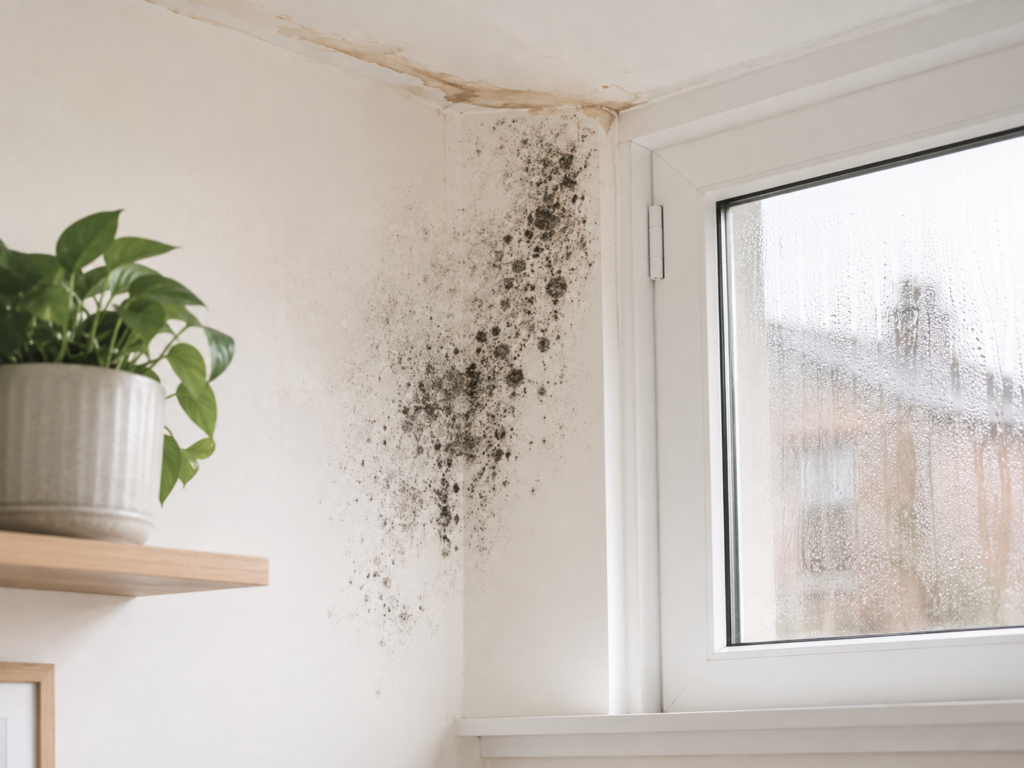
If mould keeps appearing in your home, one of the first questions to answer is whether it is being caused by everyday condensation or by an actual leak.
That distinction matters because the fix is completely different. Condensation mould is usually solved by reducing moisture in the air, improving ventilation and keeping surfaces warmer. Leak-related mould is solved by finding and fixing the source of water first. If you treat a leak like a humidity problem, the mould will keep coming back. If you treat condensation like a plumbing fault, you can waste a lot of time looking in the wrong place.
This guide explains how to tell the difference in a practical, beginner-friendly way. It covers the most useful signs to look for, where each type of mould usually appears, and what to do next depending on what you find. A simple symptom comparison table is included because it is often the fastest way to stop guessing and start narrowing the cause down properly.
If you are dealing with a wider moisture issue across windows, walls and corners rather than one isolated mould patch, How to Stop Condensation on Windows is the main cluster hub to read alongside this guide.
Why This Happens
Mould needs moisture to grow. The key question is where that moisture is coming from.
Condensation-related mould
This happens when warm moist air in the home hits a colder surface and leaves water behind. If that surface stays damp often enough, mould starts to grow.
This is common in:
- bedrooms
- bathrooms
- corners of external walls
- around windows
- behind furniture placed against cold walls
Condensation mould is especially common in winter and in homes with high humidity, weak ventilation or colder rooms. If the problem seems worst first thing in the morning, Why Do My Windows Get Condensation Every Morning? can help you understand the overnight moisture pattern that often drives mould on nearby walls and frames too.
Leak-related mould
This happens when water is entering from a plumbing fault, roof issue, failed seal, pipe leak or penetrating damp route. Instead of moisture collecting from the air, the surface is being dampened by direct water ingress.
This is more likely around:
- pipe runs
- ceilings below bathrooms
- shower enclosures
- around failed sealant
- beneath sinks
- localised wall patches that stay damp regardless of ventilation
If the mould is being fed by a leak, improving airflow alone will not solve it.
Tools or Materials You May Need
You do not need specialist equipment to make a first judgement, but these can help:
- Torch
- Tissue or dry cloth
- Hygrometer
- Notebook or phone photos to track changes
- Ladder if checking ceiling-level areas safely
- Mould cleaner for temporary surface treatment only
- Dehumidifier if condensation is strongly suspected
If the issue does turn out to be mainly air moisture rather than a leak, Best Dehumidifier for Condensation in UK Homes is the most relevant product guide.
Quick Comparison Table
Before inspecting the area in detail, use this table as a first filter.
| Sign | More Likely Condensation | More Likely Leak |
|---|---|---|
| Appears in corners, around windows or on cold walls | Yes | Less likely |
| Appears in one very localised patch with staining | Less likely | Yes |
| Worse in winter or cold weather | Yes | Sometimes |
| Improves with ventilation and heating changes | Yes | Usually no |
| Surface feels damp after rain or plumbing use | Less likely | Yes |
| Mould keeps returning in the same exact patch after cleaning | Can happen | Very common |
| Paint bubbling or plaster softening in one area | Possible but less common | More likely |
| Water marks, yellow/brown staining or tide marks | Less likely | Yes |
This does not replace a proper inspection, but it gives you a much better starting point than guessing.
Step-by-Step Fix
Step 1: Look at where the mould is growing
Location is one of the best clues.
Condensation mould is often found:
- in upper corners of bedrooms
- behind wardrobes or beds on external walls
- around window frames and seals
- on colder parts of outside-facing walls
- in bathrooms with poor extraction
Leak-related mould is more likely to be:
- in one concentrated patch
- directly below pipework or a bathroom
- along a ceiling line after heavy rain
- near a shower tray, bath edge or plumbing connection
- next to obvious staining or damaged finishes
If the mould is clustered around the window area, How to Stop Black Mould Around Window Frames (UK Guide) is a useful comparison read because that pattern is often strongly linked to condensation rather than plumbing failure.
Step 2: Check whether the surface feels cold and dry or persistently damp
A condensation-prone wall often feels cold to the touch and may only be damp at certain times, especially in the morning or after humid periods.
A leak-related area is more likely to feel:
- persistently damp
- soft in patches
- damp even when the room itself does not feel humid
- worse after rainfall or plumbing use
Use a tissue or dry cloth on the area. If the surface feels repeatedly damp in a very localised way, a leak becomes more likely.
Step 3: Look for staining, bubbling or surface damage
Condensation can lead to mould and some surface marking, but leak-related problems often bring stronger visible damage, such as:
- yellow or brown water staining
- bubbling paint
- softened plaster
- peeling paper in one defined patch
- cracked sealant with damp directly beside it
If the mould patch is accompanied by this kind of damage, especially in one specific section of wall or ceiling, do not assume it is just poor ventilation.
Step 4: Think about timing
Timing can tell you a lot.
Condensation mould is often worse:
- in winter
- after cold nights
- in mornings
- after showers, drying clothes or poorly ventilated evenings
- when windows are streaming and rooms feel humid
Leak-related mould is more likely to worsen:
- after rain
- after using a shower or bath
- after running a particular appliance or tap
- whether the room is humid or not
If the mould grows regardless of season and stays fixed in one small area, a leak is harder to rule out.
Step 5: Consider whether the room has a general humidity problem
Ask yourself:
- Do windows get wet often?
- Is there condensation elsewhere in the room?
- Does the room feel stuffy?
- Is the mould on more than one cold surface?
- Is the bathroom extraction poor?
- Are clothes dried indoors nearby?
If the answer to several of these is yes, condensation becomes much more likely. In that case, How to Reduce Humidity in a House Naturally is a very useful next step because it addresses the conditions mould needs in the first place.
Step 6: Check nearby plumbing or building features
If the mould is near:
- a shower
- sink waste
- toilet cistern
- external wall crack
- roofline
- radiator pipe
- bath seal
then check whether there is a direct moisture route nearby.
You are not trying to carry out invasive fault-finding at this stage. You are just asking whether there is a believable source of water other than humid air.
Step 7: Clean and monitor, but use the right test
If you still are not sure, clean the mould and monitor the pattern for one to two weeks.
Take photos and watch:
- does it reappear in the same concentrated patch?
- does it return fastest after rain or plumbing use?
- does it reduce if you ventilate and heat the room better?
- does a dehumidifier noticeably reduce the problem?
If better ventilation and lower humidity improve it, that points strongly toward condensation. If the mould returns in the same fixed place regardless, a leak becomes more likely.
When This Is Not a DIY Fix
You should stop treating it as a simple mould-cleaning issue and investigate further if:
- the wall or ceiling feels soft
- staining is spreading
- the mould keeps returning in one exact spot
- the patch is below a bathroom, roofline or pipe route
- the room does not otherwise suffer from humidity
- paint, plaster or timber is deteriorating
- there may be hidden water ingress
If the mould is near a bathroom fixture or under-sink area, How to Replace Mouldy Bathroom Sealant (Beginner-Friendly UK Guide) is the most relevant next guide. If the patch is clearly moisture-related but also connected to wider winter dampness, How to Stop Condensation on Bedroom Walls may be the better supporting read.
How to Prevent the Problem
The prevention depends on the cause.
If it is condensation-related
- improve ventilation
- lower indoor humidity
- keep rooms more evenly heated
- move furniture slightly away from cold external walls
- wipe window moisture regularly
- use a dehumidifier if needed
If it is leak-related
- find the water source first
- repair failed plumbing, sealant or water ingress
- dry the area properly
- only redecorate once the source is solved
If you have confirmed that the issue is mould driven by room moisture rather than a direct water fault, Do Dehumidifiers Really Stop Mould? is the most relevant next read because it explains what a dehumidifier can and cannot realistically do.
Quick Checklist Summary
- Mould needs moisture, but the moisture can come from condensation or from a leak
- Condensation mould is more likely on cold walls, in corners, around windows and in humid rooms
- Leak-related mould is more likely in one fixed patch near plumbing, showers, ceilings or staining
- Timing matters: condensation is often worse in winter and mornings; leaks often follow rain or water use
- Surface staining, bubbling paint and soft plaster make a leak more likely
- If ventilation and lower humidity improve the problem, condensation is the stronger suspect
- If mould returns in the same exact place regardless, investigate for a leak