A slow-draining or completely blocked bathroom sink is one of the most common plumbing problems in UK homes.
In most cases, the cause is simple: a build-up of hair, soap residue and toothpaste sludge in the trap or waste pipe.
Before reaching for chemical drain cleaners, there are safer, more effective methods you should try first.
In this guide, you’ll learn how to unblock a bathroom sink step by step — without damaging pipes or seals.
If you’re dealing with multiple plumbing issues, see How to Fix Common Bathroom Plumbing Problems (UK Guide)
Why Bathroom Sinks Block
Bathroom sinks typically block due to:
- Hair binding together in the trap
- Soap scum hardening inside pipework
- Toothpaste residue building up
- Shaving debris
- Reduced pipe fall in older installations
Unlike kitchen sinks, grease is rarely the main cause.
Most blockages sit in the waste trap directly beneath the basin.
Before You Start
You will need:
- Rubber gloves
- Old towels
- Bucket or washing-up bowl
- Plunger
- Drain snake or flexible drain tool
- Adjustable spanner (if required)
Avoid chemical cleaners at this stage. They can:
- Damage plastic traps
- Weaken seals
- Make dismantling messy and hazardous
Step 1 – Remove Visible Debris
Start simple.
- Remove the plug or pop-up stopper
- Pull out visible hair and residue
- Wipe around the waste opening
If your basin has a pop-up mechanism, the horizontal pivot rod behind the trap can be unscrewed to remove the stopper fully.
Test drainage again.
If still slow, continue.
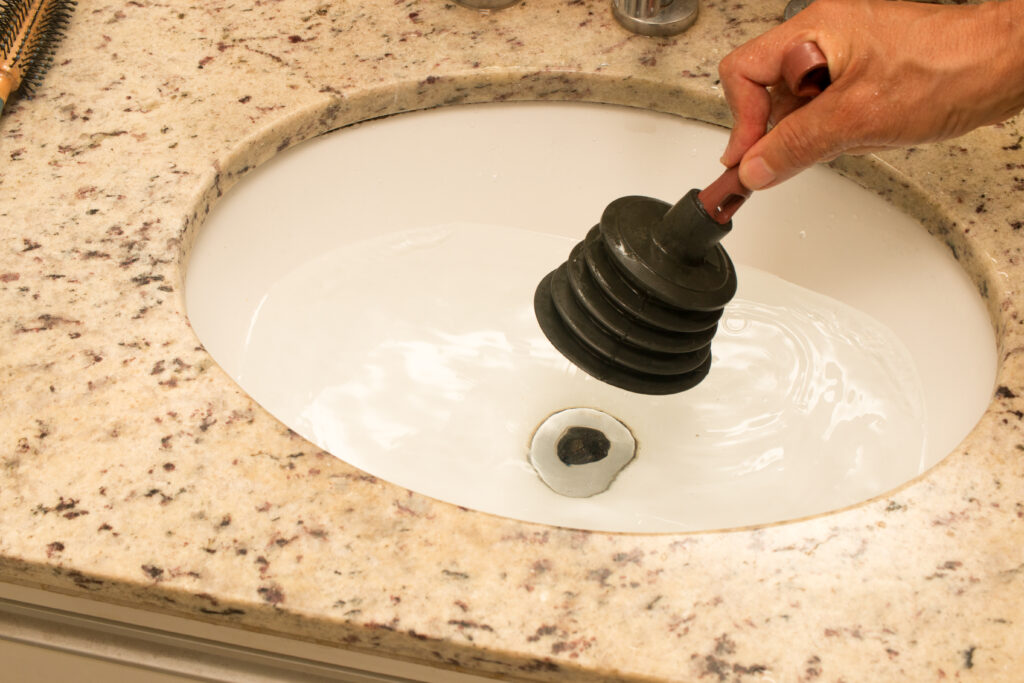
Step 2 – Use a Plunger Correctly
A plunger works best when used properly.
How to Plunge a Bathroom Sink
- Partially fill the basin with water.
- Cover the overflow hole with a damp cloth (important).
- Place plunger firmly over the plug hole.
- Pump sharply 10–15 times.
Sealing the overflow increases pressure and effectiveness.
Check drainage again.
If the blockage persists, move to the next step.
Step 3 – Use a Drain Snake or Flexible Tool
Hair blockages often sit just below the plug hole.
Insert a flexible drain tool into the waste opening.
Twist gently and withdraw.
You’ll often remove:
- Hair clumps
- Soap residue
- Sludge build-up
Repeat until clean.
Rinse with hot (not boiling) water.
If water still drains slowly, the trap likely needs cleaning.
Step 4 – Remove and Clean the Waste Trap
This is the most effective method for bathroom sink blockages.
Step 1 – Prepare
Place a bucket underneath the trap.
There will always be residual water inside.
Step 2 – Unscrew the Trap
Most UK traps are plastic compression fittings.
- Loosen slip nuts by hand
- Remove U-bend section
- Empty contents into bucket
Avoid using excessive force.
Step 3 – Clean Thoroughly
Rinse the trap under running water.
Remove:
- Hair build-up
- Hardened soap
- Debris lodged in bends
Inspect washers while dismantled.
If seals look worn, replace them.
For leaks after reassembly, see How to Fix a Leaking Bathroom Waste Trap
Step 4 – Reassemble Carefully
Ensure:
- Washers are seated correctly
- Slip nuts are hand-tight
- No cross-threading occurs
Run water and check for leaks.
Step 5 – Flush With Hot Water
After clearing the blockage:
- Run hot tap water for several minutes
- This helps flush residual debris
Avoid pouring boiling water into plastic pipes, as it can warp them.
When to Escalate
Call a plumber if:
- The blockage persists after trap cleaning
- Multiple fixtures are backing up
- You hear gurgling from other drains
- There is a foul odour that won’t clear
These may indicate a deeper soil pipe blockage.
Why Avoid Chemicals First?
Chemical drain cleaners:
- Often fail against hair blockages
- Damage plastic over time
- Can create dangerous fumes
- Make future dismantling hazardous
Mechanical removal is more effective and safer.
Use chemicals only as a last resort.
Preventing Future Blockages
To reduce recurrence:
- Install a hair catcher
- Clean the trap every 6–12 months
- Flush weekly with hot water
- Avoid rinsing shaving foam residue directly
Routine maintenance prevents emergency blockages.
Quick Checklist
If unblocking a bathroom sink:
- ✔ Remove visible debris first
- ✔ Use plunger with overflow sealed
- ✔ Try a drain snake
- ✔ Remove and clean trap if needed
- ✔ Avoid chemical cleaners initially
Related Guides
- How to Fix Common Bathroom Plumbing Problems (UK Guide)
- How to Fix a Leaking Bathroom Waste Trap
- How to Fix a Dripping Tap (Washer vs Cartridge)
- How to Fix Low Water Pressure in Bathroom Taps
- Best Bathroom Silicone Sealants (UK)
Most bathroom sink blockages are simple mechanical build-ups.
Remove the obstruction physically, reseal properly, and test thoroughly.
In most cases, that solves the problem completely — without chemicals.